

Table of Contents
Paid vs Organic Leads
Appliance repair businesses often face a critical question in their quest for clients: Should they prioritize paid vs organic leads? This decision is pivotal in shaping marketing strategies to determine growth trajectories and profitability.
Paid leads promise immediate visibility through targeted advertising and campaigns, while organic leads offer a longer-lasting presence founded on trust and engagement. For appliance repair companies, understanding the nuances between these two approaches can significantly impact both customer acquisition and retention strategies.
This article will dissect the advantages and disadvantages of paid vs organic leads, illustrating how each can serve distinct roles in your marketing toolkit. By analyzing their cost-effectiveness and the dynamics of your target audience, you’ll be equipped to make informed choices that amplify your growth.
What are Paid Leads?
Paid leads are potential customers acquired through financial investment in marketing strategies. These leads are generated by paying for advertising services such as pay-per-click advertising, promoted social media posts, and specialized platforms like Google and HomeAdvisor. The strategy focuses on quick acquisition, aiming to convert these paid contacts into clients for appliance repair businesses.
Definition and Overview of Paid Leads
Paid leads arise from targeted advertising efforts designed to capture the interest of potential customers. This model involves paying a set fee per lead, especially in PPC advertising and platforms like Google’s Local Service Ads. The price of paid leads varies depending on their exclusivity – with exclusive leads costing more due to their higher conversion likelihood. However, tracking the effectiveness of paid advertising can pose challenges as it lacks the transparency found in organic methods, and the leads generated may not always be as engaged.
How Paid Leads Are Generated
Appliance repair companies can access paid leads through a range of marketing methods. This includes buying leads from pay-per-lead campaigns, utilizing search engine marketing, and engaging in promoted social media advertisements. While these techniques offer immediacy, they can suffer from issues with accountability and lead quality, potentially prioritizing quantity over valuable client engagement. Companies investing in paid leads contribute to both their advertising expenses and the brand growth of lead generation firms, which might inadvertently increase future competition and costs.
Advantages of Paid Leads
Paid leads offer appliance repair companies the benefit of exclusivity, positioning these businesses to convert specific contacts into loyal customers. By providing control over lead volume, companies can tailor their marketing efforts to match demand, leading to efficient scaling. Pay-per-lead (PPL) models deliver high-quality leads, improving conversion rates and enhancing marketing investments’ impact. With straightforward ROI calculations, appliance repair businesses can easily assess the profitability of their marketing strategies. Furthermore, the immediacy of receiving these leads allows companies potential customer.
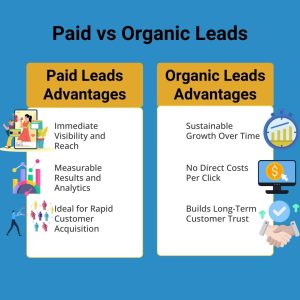
Immediate Visibility and Reach
Paid search ads are a game-changer for appliance repair companies, granting immediate visibility that attracts customers actively seeking repair services. Through pay-per-click (PPC) advertising, businesses can precisely target potential customers within their service area, optimizing geographic reach. Unlike organic SEO, which requires building time, PPC campaigns offer immediate customer engagement and lead generation. Platforms like Google Ads ensure that targeted ads appear prominently in search results, bolstering advertising efficiency and immediate reach.
Measurable Results and Analytics
Access to lead generation data empowers appliance repair companies with market insights, refining their operations to align with customer desires. Utilizing customer data can guide marketing decisions, sharpening targeting strategies for increased effectiveness. Key metrics such as click-through rate (CTR), conversion rates, and cost per conversion are critical in measuring Google Ads campaign success. Understanding lead analytics enables companies to identify valuable leads, enhancing their outreach and securing more appliance repair jobs. This not only increases revenue but also stabilizes cash flow for the business.
Ideal for Rapid Customer Acquisition
A robust online presence is essential for appliance repair companies since potential customers often search online for quick service solutions. Offering new followers discounts and sharing customer testimonials on social media significantly boost brand visibility and attract fresh leads. Existing customers are more likely to repurchase, so nurturing past customer relationships is important for acquisition strategies. Encouraging reviews and maintaining an updated Google Business profile builds trust, attracting potential customers. Effective SEO strategies enhance search rankings, making appliance repair companies more visible to those needing services.
Disadvantages of Paid Leads
High Costs and Ongoing Investment
Paid leads are subject to market demand in the appliance repair market. In densely populated areas, the expense of advertising can surge as multiple companies vie for visibility. While paid leads can deliver quick results, the investment required often fluctuates, with some leads costing just a few dollars and others reaching much higher prices. This variability can make it difficult to maintain budget consistency. Contrastingly, organic strategies like local SEO, though requiring time and consistent effort, eventually provide a more sustainable and trusted source of high-quality leads.
Dependence on Ad Management
Google Ads offers powerful tools to generate exclusive leads by targeting specific search terms, but its management requires thorough expertise. While features like customizable campaigns and call extensions can enhance visibility and attract more customers, their effectiveness heavily depends on precise management and continual optimization. appliance repair. This reliance can divert attention from other crucial marketing strategies that contribute to a robust online presence, which is essential for competing effectively in the market.
Risk of Short-Term Focus
Focusing primarily on short-term lead generation through paid ads can lead to inconsistent lead quality and hinder long-term success. While immediate results are enticing, they can be deceptive if ROI tracking isn’t implemented, potentially stalling the refinement of future strategies. This approach might also neglect essential ongoing efforts like SEO, which, although time-consuming, eventually yields a steady, cost-effective stream of quality leads. Furthermore, ignoring long-term strategies such as email marketing and customer relationship management can undermine efforts to nurture existing leads, limiting the development of a solid and loyal customer base.
What are Organic Leads?
Organic leads are a vital component of any appliance repair company’s marketing strategy. These leads are generated without direct financial investment, relying on natural methods to attract potential customers. Although the process is free of cost, it demands significant time and effort to convert these leads into loyal clients.
Definition and Overview of Organic Leads
Organic leads emerge from marketing techniques like local SEO, content marketing, and social media engagement that require no direct payment. For appliance repair companies, this means utilizing existing channels such as social media, email lists, and referrals to leverage past customer relationships and repeat business. While this approach is sustainable and cost-effective, it often necessitates a longer nurturing process to convert prospects.
How Organic Leads Are Generated
Generating organic leads involves diverse strategies, from cold calling and word-of-mouth marketing to email campaigns and local SEO efforts. Appliance repair companies can also benefit from content marketing, such as blog posts and social media updates, to engage their audience. Participating in local events and branding through signage enhances visibility, contributing to high-quality lead acquisition with minimal financial outlay. Consistent, strategic actions are essential to build trust and foster a strong community around the brand.
Advantages of Organic Leads
For appliance repair companies, organic leads present a pathway to attract high-quality prospects without the financial burden of direct costs. Utilizing platforms like social media, emails, referrals, and web forms allows these businesses to engage potential customers cost-effectively. Sharing content, such as maintenance tips and success stories, on platforms like Facebook and Instagram can spark interest and drive leads. A proactive approach in participating on review sites further enhances the online reputation, which is essential for generating high-quality organic leads. With consistent value delivery and trust-building, appliance repair businesses can foster long-term growth and customer loyalty, solidifying their presence in the market.
Sustainable Growth Over Time
Establishing a strong online presence is important for appliance repair companies aiming to attract potential customers when help is most needed. Investing in SEO strategies can significantly improve search engine rankings, fostering trust with potential clients and increasing lead generation. Businesses can secure their long-term viability by consistently managing online reputation and ratings. Adapting and refining marketing strategies helps maintain competitiveness and encourages sustainable growth in the appliance repair industry. Aligning marketing campaigns with clear business goals also sets the stage for continuous progress and improvement, which is important for enduring success.
No Direct Costs Per Click
Organic clicks from tools like Google Maps and the Map 3-Pack offer appliance repair companies a route to nearly free leads, closely mirroring the benefits of word-of-mouth referrals. While the initial investment in SEO and website optimization is necessary, the incremental costs for organic leads remain lower than continuous PPC expenses. Solutions like DataPins, despite a monthly investment, can generate leads from organic sources, eventually translating them into cost-free opportunities. This contrasts with Google Local Service Ads, which rely on a pay-per-call system offering savings when connecting directly with local prospects. Thus, high-quality organic leads prove less costly over time compared to ongoing PPC campaigns.
Builds Long-Term Customer Trust
Building trust among potential customers is paramount for appliance repair companies. Integrating testimonials and reviews into website designs showcases the experiences of satisfied clients, strengthening credibility. The Google Guaranteed badge further enhances the company’s trustworthiness, certifying that specific qualifications and background checks have been met. Accurate NAP information across platforms boosts SEO performance and fosters reliability. Encouraging satisfied clients to provide reviews simplifies testimonial acquisition, vital for establishing credibility. An up-to-date Google Business Profile solidifies a professional image, ensuring the appliance repair business is perceived as reliable and trustworthy.
Slower Results Compared to Paid Leads
Generating leads through organic methods, such as local SEO and content marketing, is a time-intensive process. Businesses may experience a delay in acquiring leads compared to the immediate impact offered by paid advertising strategies. For appliance repair companies competing in a dynamic market, the slower accumulation of organic leads can hinder immediate business growth and goal achievement.
Requires Ongoing SEO Efforts
SEO is not a one-time task but requires consistent attention and refinement. To maintain an effective online presence, businesses need to regularly adjust strategies based on performance data and evolving trends. This includes monitoring conversions and optimizing content to keep attracting quality leads. While less expensive than paid advertising in the long run, SEO demands an upfront investment of resources and continuous effort to remain competitive.
Potentially Higher Competition
The fast-growing appliance repair market in the U.S. introduces significant competition, impacting organic lead generation. High volume keywords can be hard to secure due to industry competitiveness, especially in densely populated regions. Seasonal variations also affect demand, influencing the cost and acquisition of leads. This competitive environment requires companies to be agile and diverse in their marketing tactics to successfully capture organic leads.
Comparing Cost-Effectiveness
Evaluating the cost-effectiveness of lead generation strategies in the appliance repair industry is essential. With the rising costs of leads due to heightened competition, businesses must carefully consider their options. Appliance Repair Centers Local Service Ads (LSAs) have seen lead costs average $28.98, signaling a trend of increasing expenses. Meanwhile, Google Ads campaigns deliver leads at a lower average cost of $17.49 each, highlighting the potential for more cost-efficient paid campaigns. Businesses looking to maximize results should focus on high-volume, low-competition keywords to drive traffic cost-effectively.
Analyzing ROI of Paid vs Organic Leads
When examining the return on investment, paid lead generation services offer immediate access to potential customers at an investment ranging from $18.90 to $26.46 per lead. Though these services provide rapid lead acquisition, their costs can add up, impacting the long-term financial outlook. Conversely, organic leads, costing around $9.99 each post-initial investment, often require more time and nurturing but can result in a more trusted consumer perception. Paid leads from high-quality platforms like Google and HomeAdvisor often come at a higher price. Yet, their conversion rates justify the expense, making these options a worthy consideration for businesses aiming for quality over quantity.
Budget Considerations for Each Strategy
Effective budget management is key for appliance repair companies striving to optimize their marketing strategies. It’s important to track and analyze marketing efforts, which can guide informed budget decisions. Adjusting budgets for peak and off-peak seasons helps allocate resources strategically, providing opportunities for promotions during slower periods. Performing audits on current lead sources will reveal whether the quality aligns with their costs, enabling a more thoughtful approach to resource distribution. Additionally, businesses should experiment with new marketing channels to identify more cost-effective options, ensuring that investments translate into conversions and yield strong returns.
Assessing Target Audience and Market Dynamics
Understanding your target audience is a pivotal step for appliance repair companies striving to capture a significant share of the market. Typically, your clientele includes homeowners, families, hotels, restaurants, and property management firms—essentially, anyone in need of swift and dependable appliance repair solutions. In a highly competitive market, positioning your services as the go-to choice requires adept marketing strategies that prioritize urgency and reliability.
Effective demographic targeting is imperative to reach customer segments who are most likely to require appliance repair services. For example, homeowners actively seeking timely solutions are prime candidates for your services, and advertising campaigns must be tailored accordingly. Utilizing local SEO strategies, such as optimizing your Google Business Profile, ensures that your company remains visible to potential customers within your service area, amplifying your online presence.
Identifying Your Ideal Customer Profile
Crafting a precise customer profile enables appliance repair businesses to hone their advertising strategies, ensuring that their message resonates with the right audience. Companies can tailor their marketing efforts by understanding specific customer segments to showcase relevant services that appeal to varied homeowner needs. This understanding paves the way for a clear Call to Action (CTA), motivating potential clients to engage by providing their contact information for service consultations.
Monitoring the Return on Investment (ROI) of marketing campaigns helps identify successful strategies, enabling data-driven decision-making that optimizes future ad messaging. By aligning marketing tactics with the unique repair needs of your customer base, appliance repair companies can achieve higher conversion rates and better service outcomes.
Adapting Strategies to Audience Behavior
Appliance repair companies must adjust their marketing strategies based on the behavior of potential leads. High-quality leads allow for concentrated outreach efforts, targeting individuals already interested in repair services, thus optimizing resource allocation. To capitalize on the growing trend of voice search, appliance repair businesses should refine their online presence, incorporating conversational keywords into their Google Ads and SEO strategies.
Maintaining a robust online presence, including a well-optimized website and active engagement on social media platforms, is key to attracting leads seeking fast and reliable repair services. Additionally, publishing SEO-focused content, such as instructional guides and repair tips, not only boosts search visibility but also draws in new customers looking for appliance repair solutions.
Conclusion: Which Lead is Better for Appliance Repair Companies?
Choosing between paid vs organic leads is pivotal for appliance repair companies aiming to boost their customer base. Free lead generation is sustainable and cost-effective but demands careful nurturing. It can be harder to achieve than paid methods, yet the long-term value can be substantial. Paid strategies, such as PPL campaigns and targeted advertising, provide quicker lead acquisition and potentially higher lead volumes.
Integrating multiple strategies, like Google Local Service Ads and Google Ads, optimizes marketing efforts and can prove effective for scaling operations. However, tracking performance in paid campaigns can be challenging, requiring businesses to balance speed, volume, and accountability.
Developing an optimized online presence is a must for converting leads into paying customers. A user-friendly website and strong social media engagement are essential whether the leads are paid or organic.
Key Considerations:
- Free lead generation is cost-effective but challenging.
- Paid strategies offer speed and volume but require careful tracking.
- An optimized online presence supports effective lead conversion.
Strategically blending these approaches can empower appliance repair companies to electrify their growth and success with AMP Up’s tailored marketing solutions.
About The Author


