
Table of Contents
Beware of Scams: How to Spot and Avoid Fraudulent Lead Generation Companies for Appliance Repair

You’re tired of wasting money on leads that never turn into jobs. You’ve been burned before. Maybe you paid for “exclusive leads” that five other shops also received. Or you signed up for a service that promised 50 calls per month and delivered only 12, half of which were spam.
Lead generation scams targeting appliance repair companies are everywhere. Some are obvious. Others hide behind professional websites and smooth sales pitches. The worst part? These companies know exactly how to exploit busy business owners who just want more service calls without the headache.
This guide will show you the red flags to watch for, the questions that expose fraudulent companies, and how to protect your business from predatory lead-generation tactics.
Why Appliance Repair Companies Are Prime Targets for Lead Gen Scams
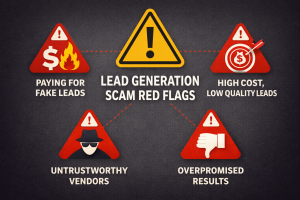
Scammers love home service businesses because the math works in their favor. You need calls to survive. You’re busy running jobs. You don’t have time to become a marketing expert. And you’re willing to pay for results.
That desperation creates opportunities for companies with no intention of delivering real value.
Here’s what makes appliance repair shops especially vulnerable:
High per-job value. A typical appliance repair call is worth $150 to $400. That means you can afford to pay $30 to $80 per lead and still profit. Scammers know this and price accordingly, even when their leads are worthless.
Local competition. In most markets, you’re competing with 10 to 30 other repair companies. Lead sellers exploit this by selling the same lead to multiple shops and calling it “competitive bidding.”
Low marketing sophistication. Most appliance repair owners didn’t go to business school. You learned the trade, built a reputation, and grew through referrals. When growth slows, you’re an easy target for companies selling shortcuts.
Urgency. When your phone stops ringing, panic sets in. Scammers use high-pressure tactics and fake urgency to get you to sign contracts before you can think clearly.
The result? Thousands of appliance repair businesses waste money every month on leads that were never real, never exclusive, or never in their service area.
The Most Common Lead Generation Scams in Appliance Repair
Not all bad lead companies are running illegal scams. Some are just terrible at what they do. Others are deliberately deceptive. Here are the most common tactics we see.
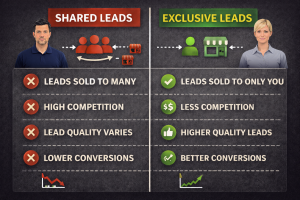
1. Shared Leads Sold as Exclusive
This is the biggest scam in the industry.
You pay $40 for a “hot lead” from someone who needs their refrigerator fixed. You call within two minutes. The customer says, “You’re the fourth company that’s called me today.”
That lead was never exclusive. It was sold to you and three other shops. The lead company collected $160 for one form fill. You got a 25 percent chance at the job and a frustrated customer who now thinks all appliance repair companies are pushy.
How to spot it: Ask the lead company directly: “Are these leads sold to multiple companies?” If they say “sometimes” or “in certain cases,” walk away. Exclusive means one company, one lead, every time.
2. Fake or Recycled Leads
Some companies generate leads by scraping old contact forms, buying data from third parties, or creating fake inquiries using bots. You get a name and phone number. When you call, the person has no idea what you’re talking about or says they filled out a form six months ago.
We’ve seen clients receive leads for people who moved out of state, for commercial properties when they only handle residential, and for phone numbers that don’t even work.
How to spot it: Track your lead-to-contact rate. If fewer than 60 percent of your leads result in an actual conversation, something is wrong. Real leads from real customers should connect at 70-85%.
3. Geographic Bait and Switch
You sign up for leads in your service area: let’s say Phoenix, Arizona. Then you start getting leads from Scottsdale, Tempe, and Glendale, all 30 to 45 minutes outside your zone. The company claims these are “nearby” and still count toward your contract.
You either drive farther than you want or let the leads go to waste. Either way, you’re paying for something you didn’t agree to.
How to spot it: Before signing, get the exact ZIP codes or city boundaries in writing. If the contract says “Phoenix metro area,” define what that means. Don’t rely on verbal promises.
4. Pay-Per-Lead with No Quality Filter
You agree to pay $50 per lead. The company sends you everything: wrong appliance type, out-of-area, people just looking for free quotes, and customers who have already chosen another company.
When you complain, they say, “We delivered the lead. It’s your job to close it.”
This model only works if the lead provider has strong filters and verifies intent before charging you. Most don’t.
How to spot it: Ask what qualifies as a billable lead. If the answer is vague or they say “any inquiry,” you’ll end up paying for unnecessary services. Look for companies that charge only for leads that match your services, your area, and demonstrate real buying intent.
5. Long-Term Contracts with No Performance Guarantee

The contract locks you in for 12 months. You’re required to pay $500 per month, whether you receive 5 leads or 50. After two months, you realize the leads are terrible, but you’re stuck.
The company won’t release you from the contract without a penalty, and they have no incentive to improve performance because they already have your money.
How to spot it: Never sign a contract longer than three months without a performance clause. If the company refuses month-to-month or quarterly terms, that’s a red flag. Confident lead providers don’t need to trap you.
6. Fake Reviews and Testimonials
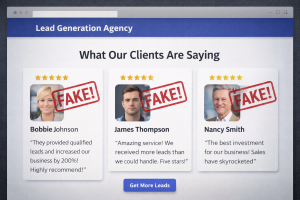
Their website features five-star reviews. Their case studies show appliance repair companies growing 300 percent in 90 days. Everything looks legitimate.
Then you Google the company name plus “scam” or “reviews” and find dozens of complaints on the Better Business Bureau, Trustpilot, or Reddit.
Fake testimonials are easy to create. Real results are not.
How to spot it: Look for reviews on third-party sites, not just their own website. Search “[company name] complaints” and “[company name] BBB.” Ask for references you can call directly, not just names on a page.
Red Flags That Scream “Stay Away”
Some warning signs are subtle. Others are glaring. Here’s what to watch for during your first conversation with any lead generation company.
They pressure you to sign immediately. Any company that uses phrases like “this offer expires today” or “we only have two spots left” is manipulating you. Legitimate companies don’t need fake urgency.
They won’t explain how they generate leads. If they can’t or won’t tell you where the leads come from (Google Ads, SEO, Facebook, partnerships), that’s a problem. Transparency is non-negotiable.
They guarantee a specific number of leads. No one can guarantee 50 leads a month unless they’re fabricating them. Lead volume depends on market size, competition, and seasonality. Real companies set realistic expectations.
They require payment upfront with no trial or proof. Asking for $2,000 before you see a single lead is a huge red flag. Look for companies that offer a smaller test period or show real-time lead flow before you commit.
Their contract has vague language. Terms such as “qualified lead” and “service area” should be clearly defined. If the contract is full of loopholes, you’ll regret signing it.
They can’t show you examples of actual leads. Request anonymized examples of the leads they deliver: screenshots of form submissions, call recordings, or lead details. If they refuse, walk away.
They don’t ask about your business. A good lead provider will ask about your service area, capacity, pricing, and the types of jobs you want. If they just pitch you a package without learning anything about your business, they don’t care about results.
How to Vet a Lead Generation Company Before You Sign
Don’t rely on their sales pitch. Do your own research. Here’s a step-by-step process for separating legitimate companies from scammers.
Step 1: Search for complaints. Google “[company name] scam,” “[company name] reviews,” and “[company name] BBB.” Read at least 10 reviews from sources other than their website.
Step 2: Ask for references. Request contact information for three current clients in the appliance repair industry. Call them and ask:
- How long have you been working with this company?
- What’s your lead-to-job conversion rate?
- Have you ever received duplicate or fake leads?
- Would you recommend them?
If they won’t provide references, that’s your answer.
Step 3: Request a sample lead report. Ask to see what a lead looks like: the information you’ll receive, how quickly you’ll get it, and how it’s delivered (email, text, dashboard). This shows you what you’re actually paying for.
Step 4: Verify lead exclusivity in writing. Get a written statement that leads are exclusive to your company and will not be sold to competitors. If they won’t put it in writing, assume the leads are shared.
Step 5: Check their online presence. Look at their website, Google Business Profile, and social media. Do they have real content that demonstrates expertise? Or is it all generic stock photos and vague promises?
Step 6: Review the contract with a lawyer. Yes, this costs money. But spending $300 on a contract review can save you $6,000 in wasted lead spend. Look for auto-renewal clauses, cancellation penalties, and vague definitions.
Step 7: Start small. If they offer a trial period or a smaller package, use it. Test the lead quality, response time, and conversion rate before committing to a long-term contract.
What the FTC Says About Lead Generation Fraud
The Federal Trade Commission has clear guidelines about deceptive marketing practices. Lead generation companies that violate these rules can face legal action, but enforcement is inconsistent.
Here’s what the FTC considers fraudulent:
Misrepresenting lead exclusivity. If a company says leads are exclusive but sells them to multiple buyers, that’s deceptive advertising.
Fake testimonials or reviews. Using fabricated customer success stories or paying for fake reviews violates FTC rules.
Hidden fees or contract terms. Burying cancellation penalties or auto-renewal clauses in fine print is considered an unfair practice.
False performance claims. Promising specific results (such as “guaranteed 100 leads per month”) without the ability to deliver is fraud.
If you believe you’ve been scammed, you can file a complaint with the FTC at ReportFraud.ftc.gov. You can also report the company to your state attorney general’s office and the Better Business Bureau.
Will you get your money back? Probably not. But your complaint creates a record that can help other business owners avoid the same trap.
Alternatives to Risky Lead Generation Services
You don’t have to rely on third-party lead sellers. There are better, more sustainable ways to generate appliance repair calls.
Build Your Own Lead Flow with Google Ads
Instead of paying a middleman, run your own Google Ads campaigns targeting search terms like “appliance repair near me” or “refrigerator repair [city].”
You control the budget, the targeting, and the messaging. Every call that comes in is yours. No sharing. No recycled leads. No games.
The downside? It requires expertise to set up correctly. Poorly managed Google Ads campaigns waste money fast. But when done right, this is the most cost-effective and scalable way to generate exclusive leads.
Invest in Local SEO
Ranking in Google’s local map pack (the three businesses that show up with map pins) generates free, high-intent leads. Customers searching for “appliance repair near me” are ready to book.
Local SEO takes time, but the ROI is unmatched. Once you rank, you get consistent call volume without paying per lead.
Optimize Your Google Business Profile
Your Google Business Profile is your most important marketing asset. Most appliance repair companies ignore it or set it up once and never update it.
Optimizing your profile (photos, posts, reviews, service details) increases visibility and trust. This drives more calls from Google Search and Google Maps without paying for ads.
Ask for Referrals and Reviews
Your best leads come from past customers. A simple follow-up system that asks for Google reviews and referrals can double your inbound call volume over six months.
Most appliance repair owners don’t ask because they assume customers will leave reviews on their own. They won’t. You have to make it easy and remind them.
Questions to Ask Before Hiring Any Marketing Company
Whether you’re evaluating a lead generation service or a full marketing agency, ask these questions:
- Where do your leads come from?
- Are leads exclusive to my company?
- What qualifies as a billable lead?
- What’s the average lead-to-job conversion rate for appliance repair clients?
- Can I see examples of actual leads you’ve delivered?
- What’s your cancellation policy?
- Can you provide references from current clients in my industry?
- How do you handle bad leads or complaints?
- Do you offer month-to-month contracts or require long-term commitments?
- What results should I expect in the first 30, 60, and 90 days?
If the company can’t answer these clearly and confidently, keep looking.
How Appliance Marketing Pros Approach Lead Generation Differently
We don’t sell leads. We build systems that generate them.
Instead of paying per lead and hoping for quality, we help appliance repair companies own their lead flow through Google Ads, local SEO, and Google Business Profile optimization. Every call that comes in is yours. No sharing. No recycling. No middleman taking a cut.
Our AMPRank system combines:
Search-only Google Ads that target high-intent keywords and eliminate wasted spend
Local SEO that gets you ranking in Google’s map pack for your service area
Google Business Profile optimization that increases visibility and trust
Lead tracking and attribution so you know exactly where every call came from and whether it turned into revenue
We work exclusively with appliance repair, HVAC, and vent cleaning companies. We understand your business model, your margins, and what actually drives job bookings.
If you’re tired of getting burned by lead generation companies that overpromise and underdeliver, let’s talk. Book a free strategy call, and we’ll show you exactly how to build predictable, exclusive lead flow without the games.
Ready to stop paying for shared leads and start owning your growth?
Schedule your free strategy call with Appliance Marketing Pros today.
About The Author


