
Blog
Surviving the "Slow Season": Marketing Tactics for Spring and Fall

Every appliance repair business owner knows the feeling. Summer ends, call volume drops, and suddenly you’re wondering how to keep your technicians busy. Then spring hits, and before the air conditioning rush starts, you’re facing the same problem all over again.
These slow seasons aren’t a surprise. They happen every year. But most appliance repair companies treat them like unexpected disasters instead of planning ahead.
The truth is, slow seasons don’t have to mean slow revenue. With the right marketing tactics, you can fill your schedule during spring and fall while your competitors sit around waiting for the phone to ring.
Why Spring and Fall Are Slow for Appliance Repair
Understanding the problem helps you fix it.
Spring and fall are transition seasons. People aren’t running their air conditioners or heaters much. Refrigerators and washers still break, but emergency call volume drops because fewer appliances are under heavy use.
Your competitors know this too. Most of them respond by cutting their marketing budgets during slow months. They figure if demand is down, why spend money on ads?
That’s exactly the wrong move.
When everyone else pulls back, that’s when you should push forward. Less competition means lower cost per click on Google Ads, better ad positions, and more visibility for your business.
The Biggest Marketing Tactics for Spring and Fall Mistakes
Most owners wait until they’re already slow to start marketing.
Here’s the problem with that approach. SEO takes time. Google Ads campaigns need optimization. Your Google Business Profile doesn’t magically start ranking overnight.
If you wait until March to start pushing, you’ve already lost half the spring season. Same thing happens in September.
Smart appliance repair companies start their slow season marketing 30 to 45 days before the slowdown hits. That gives your campaigns time to build momentum before you actually need the calls.
Tactic 1: Reactivate Your Existing Customer Database
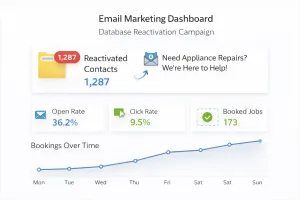
Your past customers are the fastest source of new revenue during a slow season.
Most appliance repair companies have hundreds or even thousands of past customers sitting in their system. These people already trust you. They’ve already paid you. And their appliances are still aging.
Send a reactivation campaign offering a maintenance check or a seasonal tune-up special. Focus on appliances that need regular maintenance like refrigerators, dishwashers, and washing machines.
A simple email or text message campaign can generate 10 to 20 service calls in a week. That’s enough to keep a small team busy for days.
The key is to make the offer specific and time-limited. “Spring appliance check: $89 for refrigerator coil cleaning and performance inspection. Available through April 30th.”
Don’t overcomplicate it. Just remind people you exist and give them a reason to call now instead of later.
Tactic 2: Target Commercial and Property Management Accounts
Residential call volume might be down, but commercial properties still need service.
Property management companies, apartment complexes, and rental property owners deal with appliance issues year-round. They’re also more likely to sign service agreements that guarantee you recurring revenue.
During slow seasons, shift part of your marketing focus toward commercial accounts. Update your Google Business Profile to mention commercial services. Run a separate Google Ads campaign targeting property managers and landlords.
Use keywords like “commercial appliance repair,” “property management appliance service,” or “multi-unit appliance repair.”
Commercial accounts take longer to close, but once you land them, they provide steady work during months when residential calls dry up.
Tactic 3: Run Maintenance and Tune-Up Campaigns
Most appliance repair companies only market emergency repairs. That’s a mistake during slow seasons.
People don’t think about appliance maintenance until something breaks. Your job is to change that.
Promote preventive maintenance services during spring and fall. Offer refrigerator coil cleaning, dryer vent inspections, or washing machine hose replacements.
These aren’t high-ticket services, but they keep your technicians working and they often lead to bigger repair jobs when your tech finds other issues during the visit.
Run Google Ads campaigns targeting maintenance keywords like “refrigerator maintenance,” “appliance tune-up,” or “dryer vent cleaning.” These searches have lower competition and lower cost per click than emergency repair keywords.
Your ads should emphasize prevention and savings. “Avoid costly breakdowns. Schedule your spring appliance check today.”
Tactic 4: Increase Your Google Ads Budget While Competitors Pull Back
This is counterintuitive, but it works.
When your competitors cut their Google Ads budgets during slow months, cost per click drops. Ad positions open up. You can dominate the search results for a fraction of what it costs during peak season.
If you normally spend $3,000 per month on Google Ads during summer, consider keeping that budget steady during spring and fall. You’ll get more clicks, more calls, and more visibility while everyone else is hiding.
Focus your ads on high-intent keywords like “appliance repair near me,” “refrigerator repair,” and “washer repair.” These searches still happen year-round, even if the volume is lower.
Make sure your ads are running search-only campaigns, not display or video. Display ads waste budget on people who aren’t looking for appliance repair right now.
Tactic 5: Optimize Your Google Business Profile for Local Visibility
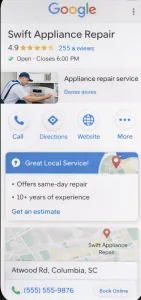
Your Google Business Profile is the most important marketing asset you have during slow seasons.
When someone searches “appliance repair near me,” Google shows a map with three local businesses. If you’re not in that top three, you’re invisible.
Here’s what actually moves the needle on your Google Business Profile ranking:
Consistent reviews. Ask every customer for a review. Aim for at least 10 new reviews per month, even during slow seasons.
Complete profile information. Fill out every section. Add services, hours, photos, and a detailed business description.
Regular posts. Publish a Google Business Profile post at least once per week. Share maintenance tips, seasonal offers, or customer success stories.
Accurate categories. Use “Appliance Repair Service” as your primary category. Add secondary categories like “Air Conditioning Repair” or “Refrigerator Repair Service” if they apply.
Photos. Upload new photos every week. Show your technicians, your trucks, and completed jobs. Google rewards businesses that stay active.
Most appliance repair companies ignore their Google Business Profile during slow months. That’s when you should be doubling down on it.
Tactic 6: Create Content That Targets Seasonal Appliance Issues

Spring and fall have specific appliance problems that people search for.
In spring, people search for refrigerator issues after switching from heating to cooling mode. They notice their fridge isn’t cooling properly or their ice maker stopped working.
In fall, people search for dryer problems as they start doing more laundry indoors. They also notice dishwasher issues as they host more family dinners during the holidays.
Create blog posts or service pages targeting these seasonal searches:
“Why Is My Refrigerator Not Cooling in Spring?”
“How to Fix a Dryer That’s Not Heating Before Winter”
“Fall Appliance Maintenance Checklist”
These pages won’t drive huge traffic, but they capture high-intent searches from people who need help right now. And because they’re seasonal, they rank easier than year-round topics.
Publish these posts 30 to 45 days before the season starts. That gives Google time to index and rank them before search volume picks up.
Tactic 7: Offer Financing or Payment Plans
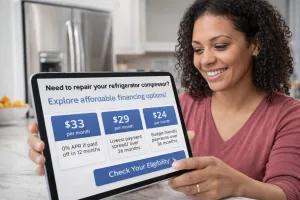
Slow seasons often overlap with times when people have less discretionary income.
Spring means tax bills and home repairs. Fall means back-to-school costs and holiday shopping.
Offering financing or payment plans removes a barrier for customers who need appliance repair but are worried about the cost.
Partner with a financing company like Wisetack, GreenSky, or Synchrony. Promote “no interest for 6 months” or “low monthly payments” in your ads and on your website.
This tactic works especially well for higher-ticket repairs like refrigerator compressor replacements or washer transmission repairs.
Mention financing in your Google Ads. “Appliance repair with easy financing. Apply in minutes.”
Tactic 8: Track Everything So You Know What’s Working
Most appliance repair companies have no idea which marketing channels actually generate revenue.
They run Google Ads, post on social media, and update their website, but they can’t tell you which channel drove the most booked jobs.
During slow seasons, you can’t afford to waste money on marketing that doesn’t work.
Set up call tracking so you know which ads generate calls. Use a CRM or job management system to track where each lead came from. Measure cost per lead and cost per booked job, not just clicks or impressions.
If your Google Ads are generating calls at $40 per lead and your average job is $300, that’s a good return. If your SEO is generating calls at $15 per lead, that’s even better.
Cut what doesn’t work. Double down on what does.
Tactic 9: Build Partnerships with Related Service Businesses
Slow seasons are a great time to build referral partnerships.
HVAC companies, plumbers, electricians, and home inspectors all work with the same customers you do. They’re also experiencing the same seasonal slowdowns.
Reach out to local service businesses and propose a referral partnership. You send them appliance repair leads when customers ask. They send you leads when they encounter appliance issues during their service calls.
These partnerships take time to build, but they create a steady stream of referrals during months when organic demand is low.
Tactic 10: Plan Your Slow Season Strategy Before It Starts
The best time to prepare for a slow season is when you’re busy.
In June and July, when your phone is ringing off the hook, sit down and plan your spring and fall marketing strategy. Decide which tactics you’ll use. Set your budgets. Build your campaigns.
That way, when August ends and call volume starts dropping, you’re ready to execute instead of scrambling to figure out what to do.
Most appliance repair companies operate reactively. They wait until they’re slow, then panic and throw money at random marketing tactics.
Smart companies operate proactively. They know slow seasons are coming, and they have a plan to stay busy.
What This Looks Like in Practice
Here’s a real example of how this works.
An appliance repair company in the Midwest runs Google Ads year-round. During summer, they spend $4,000 per month and generate about 120 calls. During spring and fall, they keep the same budget but shift their targeting.
They add maintenance keywords. They promote tune-up specials. They run a reactivation campaign to past customers.
Result: they generate 90 calls per month during the slow season instead of 40. That’s enough to keep their technicians busy and their revenue steady.
The difference isn’t luck. It’s strategy.
Stop Waiting for the Phone to Ring
Slow seasons are predictable. You know they’re coming. The question is whether you’re going to plan for them or just hope things get better.
The appliance repair companies that grow year after year are the ones that treat slow seasons as opportunities. They market when their competitors don’t. They target underserved customer segments. They build systems that generate leads even when demand is low.
If you’re tired of the revenue rollercoaster, it’s time to build a marketing system that works in every season.
We’ve helped appliance repair companies across the country build predictable lead flow systems using Google Ads, local SEO, and Google Business Profile optimization. If you want to stop worrying about slow seasons and start filling your schedule year-round, let’s talk.
Schedule a free strategy call with Appliance Marketing Pros and we’ll show you exactly how to keep your phones ringing during spring and fall.