

Table of Contents
2026 Marketing Trends You Can’t Afford to Ignore (If You Run an Appliance Repair Business)
If you run an appliance repair company, you already know the basics. You need calls. You need leads that actually book. And you need your phone to ring consistently, not just when someone’s refrigerator dies on a holiday weekend.
But here’s the problem. Most marketing advice you’ll find online is written for plumbers, HVAC companies, or some vague “home service business.” It’s not written for appliance repair. And that matters, because what works for a $12,000 HVAC replacement doesn’t always work for a $300 dishwasher repair.
This post is different. We’re going to walk through the marketing trends that will actually impact your business in 2026, based on what we’re already seeing with appliance repair clients across the country. No fluff. No generic advice. Just the shifts you need to understand if you want predictable lead flow and consistent revenue.
Why 2026 Is Different for Appliance Repair Marketing
The appliance repair space is getting more competitive. More national franchises are spending big on Google Ads. More lead-gen companies are flooding the market with shared leads and junk calls. And Google keeps changing how local search works, which means what worked in 2023 might be costing you money today.
At the same time, appliance repair owners who understand these shifts are winning. They’re getting better leads at lower costs. They’re showing up higher in Maps. And they’re building systems that bring in calls even during slow months.
The difference isn’t luck. It’s understanding what’s changing and adapting before your competitors do.
Trend 1: Google Is Prioritizing Real Businesses Over Lead Aggregators
For years, platforms like HomeAdvisor, Angi, and Thumbtack dominated Google search results. They’d rank for “appliance repair near me” and then sell your information to five other companies.
That’s changing. Google’s algorithm updates over the past 18 months have been designed to surface real businesses instead of lead marketplaces. If you search for appliance repair in most cities now, you’ll see actual repair companies ranking higher than aggregators.
This is a huge opportunity, but only if your website and Google Business Profile are set up correctly.
What this means for you:
You can compete directly for the searches that matter without paying for shared leads. But you need to make sure your website clearly states what you do, where you serve, and what appliances you repair. Vague service pages don’t rank anymore.
Your Google Business Profile needs to be treated like a real marketing asset. That means accurate categories, regular posts, consistent photos, and fast responses to reviews. If your profile looks abandoned, Google won’t show it.
What we’re seeing:
Appliance repair companies that update their Google Business Profile weekly and respond to every review within 24 hours are getting 30 to 40 percent more profile views than competitors who ignore it. That’s not a small edge. That’s the difference between three calls a week and ten.
Trend 2: Google Ads Is Getting Smarter, But Also More Expensive
Google Ads has always been one of the fastest ways to generate appliance repair leads. You bid on keywords like “refrigerator repair near me,” someone clicks your ad, and they call.
But the cost per click has been climbing. In competitive markets, a single click can cost $15 to $30. If your ad sends people to a generic homepage or a confusing landing page, you’re burning money.
The good news is that Google’s machine learning has gotten better at identifying high-intent searchers. The bad news is that if your campaign isn’t structured correctly, the algorithm will waste your budget on low-quality clicks.
What this means for you:
You can’t just “set and forget” a Google Ads campaign anymore. You need to actively manage your keyword list, exclude irrelevant searches, and make sure your ads send people to pages that match their intent.
If someone searches “Samsung dishwasher repair,” they should land on a page about Samsung dishwasher repair. Not your homepage. Not a generic contact form.
Conversion tracking is no longer optional. If Google doesn’t know which clicks turn into phone calls, it will optimize for the wrong thing. You’ll get traffic, but not customers.
What we’re seeing:
Appliance repair companies that track calls as conversions and use call-only ads during business hours are paying 20 to 35 percent less per lead than companies running the same budget without tracking. The algorithm learns faster when it knows what success looks like.
Trend 3: Local Service Ads Are Expanding, and You Need to Be There
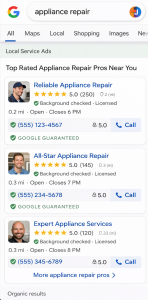
Google Local Service Ads (LSAs) are the green “Google Guaranteed” ads that appear at the top of search results. They’re pay-per-lead, not pay-per-click, which means you only pay when someone calls or messages you directly through the ad.
For years, LSAs were mostly limited to HVAC, plumbing, and electrical. But Google has been rolling them out across more appliance repair categories, and in 2026 they’ll be one of the most important lead sources for appliance repair businesses.
Here’s why they matter. LSAs show up above everything else. Above regular Google Ads. Above the map pack. If you’re not in LSAs and your competitor is, they’re getting the call.
What this means for you:
If LSAs are available in your market and category, you need to be running them. Period. The cost per lead is often lower than Google Ads, and the trust signal from the “Google Guaranteed” badge makes people more likely to call.
But getting approved takes time. Google requires background checks, proof of insurance, and license verification. If you wait until you need leads, it’s too late.
What we’re seeing:
Appliance repair companies running LSAs alongside traditional Google Ads are seeing 50 to 70 percent more total calls without doubling their budget. The combination works because you’re covering both the top and the middle of the search results.
Trend 4: Transparent Pricing Builds Trust (and Converts Better)
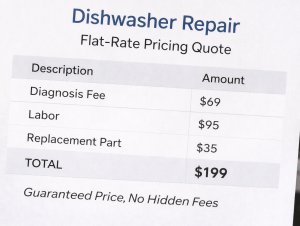
Appliance repair has a trust problem. Homeowners have been burned by companies that quote one price on the phone and charge another on-site. Or they’ve dealt with “diagnostic fees” that feel like a bait-and-switch.
In 2026, the companies that win are the ones that communicate pricing clearly and upfront. That doesn’t mean you have to list exact prices for every repair. But it does mean you need to explain how your pricing works and what customers can expect.
What this means for you:
If you charge a service call fee, make that clear on your website. If you offer free estimates for certain repairs, make that clear. If you use flat-rate pricing, explain why that benefits the customer.
Vague language like “competitive pricing” or “call for a quote” makes people nervous. They want to know what they’re getting into before they pick up the phone.
What we’re seeing:
Appliance repair companies that added a simple “How Our Pricing Works” section to their websites saw a 15-25% increase in form submissions and phone calls. People are more likely to reach out when they understand the process.
Trend 5: Speed to Lead Matters More Than Ever
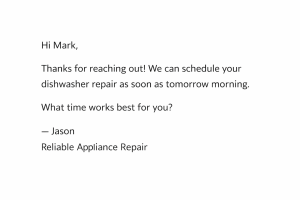
Here’s a stat that matters. If you call a lead back within five minutes, you’re nine times more likely to convert them than if you wait an hour. Most appliance repair companies wait way longer than that.
Homeowners are searching for appliance repair when something breaks. They’re frustrated. They want it fixed today. If you don’t answer the phone or call them back immediately, they’re moving on to the next company.
This isn’t just about customer service. It’s about revenue. Every missed call or delayed callback is money you’re handing to a competitor.
What this means for you:
You need a system for handling inbound leads. That might mean a dedicated person answering the phone during business hours. Or it might mean using call tracking software that sends you alerts when someone calls.
If you’re running Google Ads or LSAs and you’re not answering the phone, you’re wasting your budget. The best ad in the world doesn’t matter if no one picks up.
What we’re seeing:
Appliance repair companies that implemented a “call back within 10 minutes” policy saw their booking rate jump from 40 percent to 65 percent. The leads didn’t change. The response time did.
Trend 6: Reviews Are the New Word of Mouth (and Google Knows It)
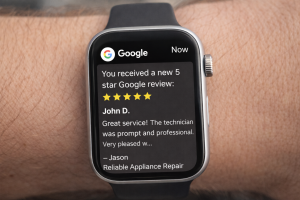
Reviews have always mattered, but in 2026 they’re among the biggest ranking factors for local search. Google looks at how many reviews you have, how recent they are, and how you respond to them.
If you have 12 reviews from three years ago and your competitor has 80 reviews from the past six months, they’re going to rank higher. Even if your service is better.
What this means for you:
You need a system for asking customers to leave reviews. Not just the happy ones. Every customer. Because the more reviews you get, the more your average rating stabilizes and the more visible you become in search results.
Responding to reviews matters too. When you reply to a negative review professionally, it shows potential customers that you care about fixing problems. When you thank someone for a positive review, it reinforces trust.
What we’re seeing:
Appliance repair companies that ask for reviews via text message within 24 hours of completing a job are getting 3 to 5 new reviews per week. That’s 150 to 250 reviews per year, which puts them ahead of 95 percent of their local competitors.
Trend 7: AI Tools Are Useful, But They Can’t Replace Strategy
Everyone’s talking about AI. ChatGPT can write blog posts. AI tools can generate ad copy. Some platforms claim they can run your entire marketing strategy.
Here’s the reality. AI is great for speeding up repetitive tasks. It’s terrible at understanding your business, your market, and what actually drives appliance repair leads.
If you use AI to write generic blog posts that don’t answer real customer questions, Google will ignore them. If you use AI to write ad copy that sounds like every other appliance repair company, you won’t stand out.
What this means for you:
AI can help you draft content, organize ideas, or analyze data faster. But it can’t replace the experience of knowing what works in appliance repair marketing. It doesn’t know that “same-day service” converts better than “fast service.” It doesn’t know that homeowners searching for “GE refrigerator repair” are more likely to book than someone searching for “appliance repair.”
Use AI as a tool, not a strategy.
What we’re seeing:
Appliance repair companies that use AI to draft content and then edit it with real experience and local knowledge are publishing more content without sacrificing quality. Companies that let AI run their marketing on autopilot are wasting money.
Trend 8: Video Content Is Growing, But Only If It’s Real
Video content is becoming more important for local SEO and social proof. Google is showing more video results in search. Facebook and Instagram prioritize video in the feed. And homeowners trust businesses more when they can see real people and real work.
But here’s the catch. The video has to be real. Polished corporate videos don’t perform as well as simple, authentic clips of your technicians explaining a repair or showing a before-and-after.
What this means for you:
You don’t need expensive equipment or a production crew. You need a smartphone and someone willing to record short clips of your team in action.
Film a 30-second video of a technician explaining why a dryer isn’t heating. Record a quick walkthrough of a refrigerator repair. Show the problem, show the fix, and explain it in plain language.
Post those videos on your Google Business Profile, your website, and your social media. Google will index them. Homeowners will watch them. And you’ll build trust before the phone ever rings.
What we’re seeing:
Appliance repair companies that post 1 to 2 short videos per week on their Google Business Profile see 20 to 30 percent more engagement and higher local search rankings. The videos don’t need to be perfect. They just need to be real.
Trend 9: Tracking and Attribution Are No Longer Optional
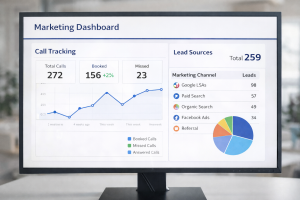
Most appliance repair owners know how much they’re spending on marketing. But they don’t know which channels are actually generating revenue.
You might be spending $2,000 a month on Google Ads and $500 on SEO. But if you’re not tracking which source each call came from, you have no way to know whether you’re wasting money.
In 2026, the companies that win are the ones that track everything. Every call. Every form submission. Every lead source. And they use that data to double down on what works and cut what doesn’t.
What this means for you:
You need call tracking software that assigns a unique phone number to each marketing channel. One number for Google Ads. One for your website. One for your Google Business Profile.
That way, when the phone rings, you know exactly where the lead came from. You can calculate your cost per lead by channel. And you can make smarter decisions about where to spend your budget.
What we’re seeing:
Appliance repair companies that implemented call tracking discovered that 40 to 60 percent of their leads were coming from sources they weren’t even tracking. Some found that their website was generating more calls than Google Ads. Others found the opposite. But they all made better decisions once they had the data.
What This All Means for Your Business
Marketing in 2026 isn’t about doing one thing really well. It’s about building a system that brings together multiple channels to generate consistent leads.
You need a strong Google Business Profile so you show up in local search. You need Google Ads to capture high-intent searches. You need reviews to build trust. You need a fast response system so you don’t lose leads. And you need tracking so you know what’s working.
The appliance repair companies that are growing right now aren’t the ones with the biggest budgets. They’re the ones with the clearest strategy and the best execution.
If you’re still relying on word of mouth or hoping the phone rings, 2026 is going to be a tough year. But if you’re willing to invest in the right systems and track what actually drives revenue, you’re going to pull ahead of 90 percent of your competition.
2026 Marketing Trends: Staying Competitive in a Rapidly Changing Market
At Appliance Marketing Pros, we specialize in helping appliance repair companies build a predictable flow of leads through Google Ads, local SEO, and Google Business Profile optimization. We don’t do shared leads. We don’t do vanity metrics. We focus on what actually matters: calls, bookings, and revenue.
If you’re tired of inconsistent call volume and want to see what a real marketing system looks like, book a free strategy call with our team. We’ll walk through your current setup, identify the gaps, and build a plan to fix them.
No pressure. No generic advice. Just a clear roadmap for getting more appliance repair leads in 2026.
About The Author


