

Table of Contents
Call Recording Horror Stories: What 1,000 Appliance Repair Dispatch Calls Taught Us About Losing Money
You’re paying for leads. Your phone rings. Your CSR answers. And then… nothing books.
If this sounds familiar, you’re not alone. Over the past year, we’ve listened to more than 1,000 recorded dispatch calls from appliance repair companies across the country. What we found was shocking, expensive, and completely fixable.
Most business owners never listen to their own calls. They assume their receptionist, spouse, or front desk person is doing fine. But when we pull the recordings and analyze what’s actually happening, the truth is hard to ignore.
You’re not losing jobs because your marketing is broken. You’re losing them because of what happens in the first 60 seconds of that phone call.
Let’s walk through the most common (and most costly) mistakes we’ve heard, why they happen, and how to fix them before they cost you another booked job.
Why Most Appliance Repair Owners Never Listen to Their Calls
Here’s the uncomfortable truth: most owners avoid listening to their calls because they’re afraid of what they’ll hear.
Maybe it’s your spouse answering between errands. Maybe it’s you, and you know you sound rushed. Maybe it’s a part-time receptionist who doesn’t really understand the difference between a sealed system job and a simple door latch.
Whatever the reason, avoidance is expensive.
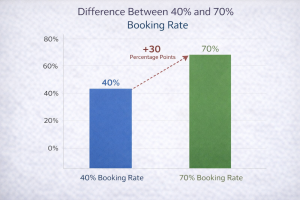
When you’re spending money on Google Ads, SEO, or Local Service Ads, every call that doesn’t book is wasted marketing budget. If your booking rate is 40% when it should be 75%, you’re essentially paying double for the same number of jobs.
Call recording isn’t about micromanaging. It’s about protecting your investment and understanding where the breakdown actually happens.

The 7 Most Expensive Mistakes We Heard in 1,000 Calls
1. Answering the Phone Like It’s an Interruption
“Yeah, hello?”
“Hang on, let me find a pen.”
“Can you call back in 10 minutes?”
We’ve heard all of it. And every single time, the customer either hangs up or says they’ll “think about it” and calls someone else.
When someone searches for appliance repair and clicks your ad or calls your number, they’re in decision mode. They have a broken fridge, a washer that won’t drain, or a dryer that’s making a horrible noise. They want help now.
If your greeting sounds distracted, annoyed, or unprepared, you’ve already lost the job.
What works instead: A confident, professional greeting that immediately reassures the caller they’ve reached the right place.
“Thanks for calling [Your Company Name], this is [Name]. What’s going on with your appliance today?”
That’s it. Friendly, direct, ready to help.
2. Asking “What’s Your Address?” Before You Know the Problem
This one drives us crazy because it’s so common.
The call starts, and within 10 seconds, the CSR is asking for the customer’s address, phone number, and email before they even know what’s broken.
Here’s what happens in the customer’s mind: “Wait, are they just collecting my info to spam me? Do they even care what’s wrong?”
You lose trust immediately.
What works instead: Start with the problem. Ask what appliance is broken, what it’s doing (or not doing), and how long it’s been happening. Build rapport first. Gather contact info after they feel heard.
3. Quoting a Price Over the Phone (and Losing the Job)
“How much do you charge?”
This is the question every CSR dreads. And the way most people handle it costs them the booking.
Here’s what we hear all the time:
“Our service call is $89, and then the repair depends on what’s wrong.”
The customer hears “$89 just to show up” and starts shopping around. You never had a chance to explain your value, your experience, or why your company is worth choosing.
What works instead: Redirect to value and process, not price.
“Great question. Because every appliance and situation is a little different, our technician will come out, diagnose exactly what’s going on, and give you a clear quote before any work starts. Most repairs we handle the same day. Does morning or afternoon work better for you?”
You’ve acknowledged the question, explained the process, and moved toward booking. You didn’t dodge it. You just didn’t let price be the only thing they remember.
4. Failing to Triage the Call
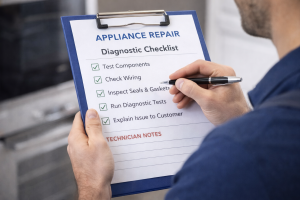
Not every call is a good fit. And not every call is urgent.
We’ve listened to calls where the CSR books an emergency same-day appointment for a cosmetic issue that’s been going on for six months. Or where they try to schedule a repair on a 20-year-old appliance that’s barely worth fixing.
If you don’t ask the right diagnostic questions, you waste your technician’s time, frustrate the customer, and hurt your first-time fix rate.
What works instead: Ask qualifying questions.
- What brand and type of appliance is it?
- How old is it?
- What exactly is it doing?
- Is this something that just started, or has it been happening for a while?
These answers help you set the right expectations, prioritize your schedule, and even recommend replacement when that’s the smarter move.
5. Not Handling Objections with Confidence
“I’m just calling around to get some prices.”
“I saw another company that doesn’t charge a trip fee.”
“Can I just get a ballpark?”
When your CSR hears these objections and doesn’t know how to respond, they either freeze, apologize, or give up. The call ends with “Okay, well, let me know if you want to schedule.”
That’s a lost job.
What works instead: Acknowledge, educate, redirect.
“I totally understand. A lot of folks call around, and that makes sense. What most of our customers tell us is they care more about getting it fixed right the first time than just finding the cheapest quote. We’ve been doing this for [X years], and we’ll make sure you know exactly what’s wrong and what it’ll take to fix it before we start. Can I grab your address and get you on the schedule?”
You’re not defensive. You’re not apologizing. You’re confidently guiding the conversation back to booking.
6. Letting the Customer Control the Call
Some customers are chatty. Some want to explain every detail of what happened, what they tried, and what their neighbor said might be wrong.
If your CSR just listens passively and lets the call wander, it drags on, loses focus, and often ends without a booking.
What works instead: Polite, purposeful redirection.
“Got it, that’s helpful. Let me get you scheduled so our technician can take a look and get that sorted out for you. What’s the best address for us to come to?”
You’re acknowledging what they said, but you’re steering the call toward the outcome: a booked appointment.
7. No Clear Next Step at the End of the Call
This is the most painful one to hear.
The call goes well. The customer seems interested. And then the CSR says:
“Okay, so give us a call back when you’re ready.”
Or: “We’ll send you a text with some times.”
Or: “Let me check with my manager and I’ll get back to you.”
The call ends. No appointment was confirmed. No follow-up happens. The lead goes cold.
What works instead: Confirm the appointment before you hang up.
“Perfect. So I’ve got you down for [Day] at [Time] at [Address]. You’ll get a text confirmation, and our technician will call about 30 minutes before he arrives. Does that work for you?”
Clear. Confident. Confirmed.
What a Good Call Actually Sounds Like
Let’s put it all together with a real example (details changed, but structure is real):
CSR: “Thanks for calling ABC Appliance Repair, this is Sarah. What’s going on with your appliance today?”
Customer: “Yeah, my dryer isn’t heating up.”
CSR: “Okay, got it. Is it a gas or electric dryer?”
Customer: “Electric.”
CSR: “And what brand is it?”
Customer: “It’s a Whirlpool.”
CSR: “Perfect. How long has this been going on?”
Customer: “About a week. I thought maybe it just needed a break, but it’s still not working.”
CSR: “That makes sense. We see that a lot, and it’s usually something we can fix pretty quickly. Let me get you on the schedule. What’s your address?”
Customer: “123 Main Street.”
CSR: “Great. And your name?”
Customer: “John Smith.”
CSR: “Perfect, John. I’ve got availability tomorrow afternoon or Thursday morning. Which works better for you?”
Customer: “Tomorrow works.”
CSR: “Awesome. I’ve got you down for tomorrow between 1 and 3 p.m. You’ll get a text reminder, and our tech will call about 30 minutes out. Sound good?”
Customer: “Yeah, that’s fine.”
CSR: “Perfect. We’ll see you tomorrow. Thanks, John.”
That call took less than two minutes. It was friendly, clear, and it booked the job.
The Real Cost of Bad Dispatch Calls
Let’s do the math.
Say you’re spending $2,000 a month on Google Ads and SEO. You’re getting 100 calls a month. If your booking rate is 40%, you’re booking 40 jobs.
But if you fix your call handling and get that booking rate up to 70%, you’re now booking 70 jobs from the same ad spend.
That’s 30 extra jobs a month. If your average ticket is $250, that’s $7,500 in additional revenue without spending another dollar on marketing.
Over a year, that’s $90,000.
Bad call handling isn’t just frustrating. It’s one of the most expensive problems in your business.
How to Start Fixing This Today
You don’t need expensive software or a complete overhaul. You just need to start listening and coaching.
Here’s what to do:
Step 1: Turn on call recording. Most VOIP systems and Google Ads call tracking tools have this built in. If you’re not recording calls, you’re flying blind.
Step 2: Listen to 10 calls this week. Pick a mix of booked jobs and calls that didn’t convert. Take notes on what you hear.
Step 3: Create a simple script or call guide. It doesn’t need to be word-for-word, but it should cover:
- Greeting
- Diagnostic questions
- Objection responses
- Closing and confirmation
Step 4: Role-play with your team. Practice handling objections, redirecting price questions, and confidently closing the call.
Step 5: Review calls weekly. Make it a habit. Celebrate what’s working and coach what’s not.
This isn’t about being harsh or critical. It’s about protecting the money you’re already spending and making sure every lead has the best chance to convert.
The Bottom Line
Your marketing might be working just fine. Your Google Ads might be driving calls. Your SEO might be bringing in traffic.
But if your call handling is broken, none of it matters.
We’ve heard it a thousand times. Literally. And the companies that take this seriously, listen to their calls, and train their team see immediate, measurable results.
You don’t need more leads. You need to book the ones you’re already getting.
If you want help analyzing your calls, improving your booking rate, or building a system that actually converts leads into revenue, let’s talk. We’ve done this with dozens of appliance repair companies, and we know what works.
Book a free strategy call with Appliance Marketing Pros and we’ll walk you through exactly where your leads are falling through the cracks and how to fix it.
About The Author


