
Blog
Win High-Ticket Leads with Repair vs. Replace Content
You probably didn’t get into appliance repair to become a content writer. But here’s the reality: the companies generating the most consistent, high-paying service calls aren’t waiting for the phone to ring. They’re showing up in Google search results at the exact moment homeowners decide whether to fix or replace a broken appliance.
That decision point is worth thousands of dollars to your business. A homeowner searching “should I repair or replace my Sub-Zero refrigerator” is asking a $10,000 question. They own premium appliances. They value expert advice. And they will pay a fair price for quality work.
Most appliance repair companies miss these searches entirely. Their websites focus on generic service descriptions or try to rank for low-margin keywords that attract tire-kickers. Meanwhile, someone in your service area just hired your competitor because that company published a clear, helpful guide about repairing high-end appliances.
This article explains how to use repair vs replace content to attract homeowners with expensive appliances, higher budgets, and real urgency. We’ll show you what to write, where to publish it, and how to turn these searches into booked jobs.
Why “Repair vs Replace” Content Works for Appliance Repair Marketing
Homeowners search repair vs replace questions when they’re already frustrated. The refrigerator stopped cooling. The oven won’t heat. The dishwasher is leaking. They’re past the DIY troubleshooting phase and trying to figure out if calling you makes financial sense.
This is the highest intent traffic you can capture without running paid ads.
When someone searches “should I repair or replace my 10 year old dishwasher,” they’re not browsing. They need an answer today or tomorrow. If your company provides that answer clearly and positions repair as the smarter option for certain situations, you become the obvious call.
Here’s what makes this content strategy particularly effective for appliance repair lead generation:
You’re educating buyers at decision time. They’re holding a credit card and looking for permission to spend money on the right solution.
You filter out low-value calls. Someone researching whether to fix a 15-year-old basic model Kenmore is probably price shopping. Someone researching a 5-year-old Wolf range values quality and wants expert guidance.
You build trust before the phone call. Most appliance repair companies sound identical in Google Ads or directory listings. A well-written article proves you understand appliances, costs, and real-world ownership decisions.
You rank faster than service pages. Google rewards helpful, specific content. A 1,500-word guide about repairing vs replacing high-end refrigerators will often outrank a generic “refrigerator repair” service page.
The appliance repair companies using this strategy consistently report higher average tickets, fewer price objections, and better close rates on estimates.
What Makes Repair vs Replace Content Rank and Convert
Not all repair vs replace content performs equally. Most generic blog posts fail because they don’t match what Google wants to show or what appliance owners actually need.
Write for Specific Appliance Types and Brands
Don’t write one generic post titled “Should You Repair or Replace Your Appliance?” That’s too broad and won’t rank for anything meaningful.
Instead, create individual posts for:
- Repair vs replace dishwashers
- Repair vs replace refrigerators
- Repair vs replace high-end appliances (Sub-Zero, Wolf, Thermador, Miele)
- Repair vs replace front-load washers
- Repair vs replace gas ranges
The more specific the topic, the easier it is to rank and the more qualified the visitor.
If you serve areas with higher household incomes, prioritize high-end appliance content. Homeowners who paid $12,000 for a Sub-Zero built-in refrigerator will almost always choose repair over replacement if the fix is reasonable. They don’t want to rip out custom cabinetry or wait six weeks for a new unit.
Answer the Core Question Immediately
The reader showed up with one question. Answer it clearly in the first 200 words.
Use a simple decision framework like:
Repair if:
- The appliance is under 8 years old
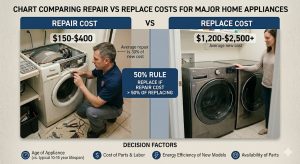
- Repair costs less than 50% of replacement
- The brand is known for longevity
- Parts are readily available
Replace if:
- The appliance is over 12 years old
- You’ve had multiple repairs in the past two years
- Energy costs are significantly higher with older models
- The repair estimate exceeds 60% of a new unit
This structure gives the reader immediate value and positions you as someone who prioritizes honest advice over selling unnecessary service calls.
Include Real Cost Comparisons
Appliance owners want numbers. Vague statements like “repairs are often more affordable” don’t build trust.
Instead, explain typical repair costs vs replacement costs for common failures:
A compressor replacement on a high-end refrigerator might cost $800 to $1,500. A comparable new unit costs $8,000 to $15,000. For a 5-year-old appliance, repair is the clear winner.
A control board on a 14-year-old dishwasher might cost $400 to replace. A new mid-range dishwasher costs $600 to $900. Replacement often makes more sense unless the homeowner loves the current model.
You’re not publishing your exact pricing. You’re giving ranges that help people make informed decisions. That transparency builds trust and separates you from companies that hide pricing until they’re in the door.
Target the Right Keywords Naturally
Your primary keyword should appear in:
- The H1 title
- At least one H2 heading
- The first 100 words of the article
- Naturally throughout the body content
For a post about high-end appliances, use phrases like:
- Repair vs replace high-end appliances
- Should I repair or replace my Sub-Zero refrigerator
- Wolf range repair vs replacement
- Is it worth fixing expensive appliances
But don’t force it. Write for humans first. Google rewards content that actually answers questions, not content stuffed with exact-match keywords.
Add Local SEO Signals
If you serve a specific city or metro area, weave location into the content naturally.
Example: “Homeowners in [City] with older appliances often ask whether repair or replacement makes more sense given local disposal fees and delivery timelines.”
You can also create location-specific versions of high-performing posts. A guide titled “Repair vs Replace Appliances in Austin” will rank for local searches and attract nearby homeowners ready to book.
How to Structure High-Converting Repair vs Replace Blog Posts
Strong appliance repair content marketing follows a predictable structure. It educates, builds trust, and moves the reader toward a clear next step.
Introduction: Speak to the Pain Point
Start by acknowledging the reader’s situation. They’re frustrated, unsure, and probably comparing quotes or opinions.
Example: “Your refrigerator isn’t cooling properly and you’re trying to decide if it’s worth fixing or if you should just replace it. It’s not a simple answer. The right choice depends on the age of the unit, the cost of the repair, and how long you plan to stay in your home.”
Section 1: When Repair Makes Sense
Explain situations where repair is the smarter financial decision. Use short paragraphs and bullet points.
Cover factors like:
- Appliance age and expected lifespan
- Repair cost as a percentage of replacement cost
- Brand quality and parts availability
- Warranty coverage
- Sentimental or aesthetic value for built-in units
This section positions you as someone who won’t sell unnecessary repairs.
Section 2: When Replacement Makes Sense
Be honest about when repair doesn’t make sense. This builds credibility.
Discuss scenarios like:
- Appliances approaching or past their expected lifespan
- Multiple repairs within a short period
- Outdated models with poor energy efficiency
- Discontinued brands with limited parts availability
Section 3: Cost Breakdown for [Specific Appliance Type]
Provide real-world cost ranges for common repairs and replacement options.
Example for refrigerators:
Common repairs:
- Compressor: $800-$1,500
- Evaporator fan motor: $200-$400
- Control board: $300-$600
Replacement costs:
- Standard top-freezer: $600-$1,200
- French door mid-range: $1,500-$3,000
- High-end built-in: $8,000-$15,000
Readers comparing these numbers will immediately see when repair is the obvious choice.
Section 4: What to Ask Before You Decide
Give the reader a checklist of questions to ask any repair company:
- How old is my appliance?
- What specifically needs to be repaired?
- How much will the repair cost?
- How long should the repair last?
- Are there other potential issues you see?
- What would you do if this were your appliance?
This prepares them for a productive conversation and sets the expectation that good technicians provide transparent advice.
Section 5: How to Find a Reliable Appliance Repair Company
Position your company as the logical next step without sounding pushy.
Explain what homeowners should look for:
- Licensed and insured technicians
- Transparent pricing before work begins
- Experience with your specific appliance brand
- Strong Google reviews from real customers
- Fast response times for urgent repairs
Then include a natural transition: “If you’re in [service area] and need expert advice on whether to repair or replace your appliance, our team has over [X] years of experience helping homeowners make the right decision.”
Conclusion and Clear Call to Action
Summarize the key decision factors and provide one clear next step.
Example: “Deciding whether to repair or replace an appliance depends on age, repair costs, and your specific situation. If you’re unsure which option makes the most sense, we’re happy to provide a free diagnostic and honest recommendation. Call [phone number] or schedule online to get answers today.”
Make it easy to contact you. Include a phone number, click-to-call button, and online scheduling link if you have one.
Where to Publish and Promote Your Repair vs Replace Content
Writing great content is half the work. The other half is making sure it reaches appliance owners in your service area.
Publish on Your Own Website First
Never publish your best content on third-party platforms like Medium or LinkedIn as the primary home. Your website should be the source.
Create a dedicated blog section and publish repair vs replace guides as long-form blog posts. Each post should have its own URL, clear title tag, and meta description.
Make sure your website loads fast, works on mobile devices, and includes clear calls to action on every page. Slow websites lose rankings and conversions.
Optimize for Local Search
Google prioritizes content that matches the searcher’s location and intent.
To strengthen local SEO signals:
- Include your city and service area in at least one heading and several body paragraphs
- Link from blog posts to your main service pages
- Link from service pages back to relevant blog content
- Add location schema markup if your website platform supports it
- Publish service area pages for each city you serve
A blog post about repairing high-end appliances in Dallas should link to your Dallas refrigerator repair service page. That internal link structure helps Google understand your relevance for local searches.
Share on Your Google Business Profile
Google Business Profile posts don’t directly improve rankings, but they increase visibility and engagement.
When you publish a new repair vs replace guide, create a short Google Business Profile post that summarizes the key takeaway and links to the full article.
Example: “Not sure if your Sub-Zero refrigerator is worth fixing? Our latest guide breaks down repair vs replacement costs and helps you make the right decision. Read it here: [link].”
Post consistently. Even if engagement is low, regular activity signals to Google that your business is active and responsive.
Use the Content in Follow-Up Sequences
When someone requests a quote or asks for pricing, send them a link to your relevant repair vs replace guide along with your estimate.
Example email: “Hi [Name], here’s the estimate we discussed for your dishwasher repair. I also put together a guide that explains when repair makes sense vs replacement. It might help as you decide: [link]. Let me know if you have any questions.”
This reinforces your expertise and moves price-sensitive leads toward booking.
Common Mistakes Appliance Repair Companies Make with Content Marketing
Most appliance repair businesses either don’t create content or create content that doesn’t perform. Here are the mistakes that waste time and money.
Writing About Topics Homeowners Don’t Search
Content about “the history of refrigeration” or “fun facts about dishwashers” won’t generate leads.
Stick to topics with real search volume and buyer intent:
- Repair vs replace decisions
- Common appliance problems and fixes
- Brand comparisons
- Cost guides
- Troubleshooting steps
If you’re not sure what people search, use Google autocomplete. Type “should I repair” into the search bar and see what Google suggests. Those are real queries from real homeowners.
Publishing Generic, Thin Content
A 400-word post that says “repair is usually cheaper than replacement” won’t rank or convert.
Google rewards depth and specificity. Aim for 1,500 to 2,500 words for repair vs replace content. Cover the topic thoroughly and anticipate follow-up questions.
Ignoring Mobile Users
Most appliance repair searches happen on mobile devices. Homeowners are standing in their kitchen looking at a broken appliance and searching for help.
If your website is hard to read on a phone or your call button isn’t easy to find, you’re losing calls.
Not Tracking Results
You can’t improve what you don’t measure.
Use Google Analytics to track:
- Which blog posts get the most traffic
- How long visitors stay on each post
- Which posts lead to contact form submissions or phone calls
If a post about repairing Sub-Zero refrigerators drives 10 booked jobs per month, create more content targeting high-end appliance owners.
If a post gets traffic but no conversions, improve the call to action or rewrite sections that aren’t clear.
Giving Up Too Early
SEO takes time. New content doesn’t usually rank on page one in the first 30 days.
Expect 60 to 90 days before you see meaningful traffic. Keep publishing consistently and update older posts with new information as needed.
The appliance repair companies that dominate local search didn’t publish three blog posts and quit. They built a library of helpful content over six months to a year.
How Appliance Marketing Pros Helps You Win High-Ticket Leads with Content
Building a content marketing system that actually generates booked jobs takes time, skill, and consistent execution. Most appliance repair owners don’t have the bandwidth to research keywords, write optimized posts, and manage technical SEO while running service calls.
That’s where we come in.
Appliance Marketing Pros specializes in appliance repair marketing. We’ve worked with companies across the United States to build lead generation systems that combine local SEO, Google Ads, and content marketing into one predictable growth engine.
Our AMPRank system focuses on the strategies that deliver real results: optimized Google Business Profiles, high-intent service area pages, targeted repair vs replace content, and search-only Google Ads campaigns that focus on booked jobs, not vanity metrics.
We understand the appliance repair business. We know what high-margin service calls look like. We know how to attract homeowners with Wolf ranges and Sub-Zero refrigerators instead of people trying to fix a 20-year-old builder-grade dishwasher.
If you’re ready to stop chasing shared leads and start generating consistent, high-quality calls from your local market, let’s talk.
Schedule a strategy session with Appliance Marketing Pros and we’ll review your current setup, identify what’s holding back your lead flow, and build a plan to grow your appliance repair business. No fluff, no long-term contracts, just clear systems that deliver results.
Visit appliancemarketingpros.com or call us today to AMP up your growth.