Blog
Scaling to New Cities with Multi-Location Local SEO

How Appliance Repair Companies Can Scale to New Cities Without Wasting Money on Unproven SEO
You’re already getting calls in your main service area. Your Google Business Profile is verified. You’re ranking for a few good local keywords. But when you look at the map and see three more nearby cities where you could be working, you start wondering: what’s the right way to expand without starting from scratch?
Most appliance repair business owners get this wrong in one of two ways. They either create a second website with a new domain for the new city (which splits your ranking power and doubles your workload) or they add a sentence to their homepage that says “Now serving Springfield too!” and expect Google to figure it out.
Neither approach works.
Scaling to new cities with multi-location local SEO means building a structured system that tells Google exactly where you operate, what you fix, and why customers should call you instead of the 12 other repair companies in that area. It’s not complicated, but it does require following a specific process that works with how Google actually ranks local service businesses.
Why Most Appliance Repair Companies Fail When They Try to Expand
The biggest mistake is thinking that adding a new city to your service area is the same as optimizing for it. You can’t just update your Google Business Profile to show a 30-mile radius and expect calls from towns you’ve never ranked in before.
Google ranks businesses based on three factors: relevance, distance, and prominence. When you’re trying to rank in a new city, you’re starting with zero prominence there. No reviews mention that city. No one in that area has clicked your listing. Your website doesn’t have a page about your service in that location.
From Google’s perspective, you’re not a real option for searchers in that city yet.
The second mistake is creating separate Google Business Profiles for cities where you don’t actually have a physical location. If you’re a service-area business with mobile technicians, Google’s guidelines are clear: you can have only one GBP per physical location where customers can visit or where you have staff present during business hours. If you try to create fake locations just to rank in more cities, you risk getting all your profiles suspended.
The third mistake is building duplicate content. Let’s say you serve both Phoenix and Scottsdale. You create two location pages, and the only difference between them is swapping out the city name. Google sees this as thin content, and in many cases, it won’t rank either page because there’s no unique value.
The Right Way to Structure Your Website for Multiple Cities
When you’re expanding to new cities, your website structure matters more than most business owners realize. The goal is to create individual location pages with unique content, local relevance, and ranking power, while keeping everything under your main domain.
The best approach is to use subfolder URLs like this:
- yourdomain.com/phoenix-appliance-repair
- yourdomain.com/scottsdale-appliance-repair
- yourdomain.com/tempe-appliance-repair
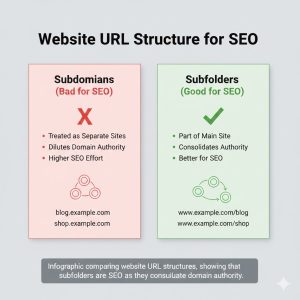
Each page lives under your main domain, which means all the authority and trust your site has built over time supports these new pages. This is different from using separate domains (phoenixappliancerepair.com) or subdomains (phoenix.yourdomain.com), both of which split your SEO power and create more work.
Every location page should include:
- A unique H1 title with the city name and primary service
- Your business name, phone number, and service area are clearly displayed
- A local phone number or call tracking number specific to that area (if you use call tracking)
- Detailed information about the types of appliances you repair in that city
- Real customer reviews or testimonials from people in that area
- Photos of your technicians working in that city (not stock images)
- Information about neighborhoods, zip codes, or landmarks you serve
- Specific details about response times or service availability in that area
- An embedded Google Map showing your service coverage
The content on each page needs to be genuinely different. If you serve both Scottsdale and Tempe, the pages can’t just swap city names. You need to write about the specific appliance problems common to each area, mention local neighborhoods, reference the types of homes or appliances in that market, and show that you actually work there.
How to Set Up Your Google Business Profile for Multiple Cities
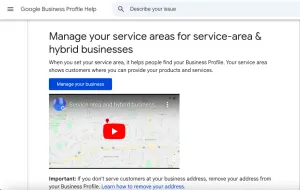
If you’re a service area business, Google allows you to define a service area radius or list specific cities you serve. But simply adding cities to your GBP settings doesn’t automatically rank you in those cities. It just tells Google where you’re willing to travel.
To actually rank in new cities, you need to build prominence in each area. That means:
- Getting reviews from customers in the new city
- Creating content on your website about serving that city
- Building local citations (directory listings) that mention your service in that city
- Earning backlinks or mentions from local sources in that area
- Driving clicks, calls, and direction requests from searchers in that city
If you have an actual physical location in a new city (an office, storefront, or dispatch center where customers can visit), you can create a separate Google Business Profile for that location. This gives you a much stronger ranking signal because Google can verify you’re actually there. But remember: you can’t fake this. If you don’t have a real location, don’t try to create one just for SEO.
When setting up multiple GBPs for real locations:
- Use the exact physical address for each location
- Use a unique local phone number for each (if possible)
- Never use a P.O. box or virtual office
- Keep the business name consistent across all locations
- Choose the most specific primary category (Appliance Repair Service)
- Add secondary categories if you specialize (Refrigerator Repair, Washer Repair, etc.)
- Upload unique photos for each location
- Write a unique business description for each profile
Each GBP needs to be managed individually. That means posting updates, responding to reviews, uploading photos, and keeping hours up to date for every single location. This is where many multi-location businesses fail. They set up the profiles and then forget about them.
Creating Location Pages That Actually Rank and Convert
A good location page does two things: it helps you rank in local search results, and it convinces the visitor to call you instead of someone else. Most appliance repair companies focus only on the ranking aspect and forget that the page still needs to serve as a sales tool.
Here’s what should be on every location page:
- A Clear H1 Heading
Make it specific and direct. Not “About Our Services” but “Phoenix Appliance Repair: Same-Day Refrigerator, Washer & Dryer Repair”
- Your Service Area Clearly Defined
List the neighborhoods, zip codes, or nearby cities you serve within this location. Don’t make people guess if you’ll come to their area.
- Appliance Types You Repair
Be specific. List refrigerators, washers, dryers, dishwashers, ovens, ranges, microwaves, ice makers, or whatever you actually service. Don’t just say “all major appliances.”
- Local Content That Shows You Actually Work There
Mention specific challenges you see in that area. Maybe homes in Scottsdale have hard water, which can damage dishwashers faster. Maybe older neighborhoods in Tempe have more refrigerator compressor failures. These details show you know the market.
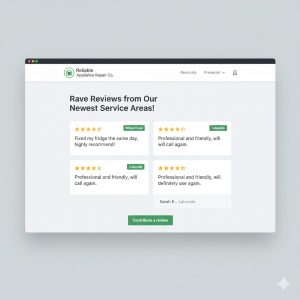
- Customer Reviews or Testimonials From That Area
If you’ve done work in this city before, show proof. Even one or two reviews from real customers in that area build trust faster than generic service descriptions.
- Real Photos From Jobs in That City
Stock photos hurt more than they help. If you’re expanding to a new city and don’t have photos yet, it’s better to use photos from your main area than fake local images. But once you start working in the new city, replace them with real local content.
- Clear Next Steps
Make it obvious what the visitor should do next. A phone number at the top of the page. A simple contact form. A button that says “Call for Same-Day Service.” Don’t bury your contact info or make people search for it.
- Internal Links to Related Content
Link to your main service pages (refrigerator repair, washer repair, etc.) and to other location pages if relevant. This helps Google understand your site structure and keeps visitors engaged.
The goal is to create a page that feels like it was written specifically for people in that city, not just a template with the city name plugged in.
Local Citations and Directory Listings for Each City
Local citations are mentions of your business name, phone number, and address on other websites. These include directories like Yelp, Yellow Pages, Angi, and local business listings.
When you expand to a new city, you need to build citations that show you serve that area. This doesn’t mean creating fake addresses. It means listing your actual business with service area details that include the new city.
For service area businesses, focus on:
- Yelp (include your service areas in your business description)
- Yellow Pages
- Angi (formerly Angie’s List)
- Thumbtack
- HomeAdvisor (if you use lead generation platforms)
- Local Chamber of Commerce directories
- City or county business directories
- Industry-specific directories (appliance repair associations, BBB, etc.)
The key is consistency. Your business name, phone number, and service areas should match across every listing. If your GBP says “ABC Appliance Repair” and your Yelp profile says “ABC Appliance Repair & HVAC,” Google sees these as different businesses.
Don’t try to build hundreds of citations. Focus on the 10 to 15 most important directories in your industry and local area. Quality matters more than quantity.
Getting Reviews in Your New Service Area
Reviews are one of the strongest ranking factors for local SEO, and they’re even more important when you’re trying to establish credibility in a new city.
When you expand to a new area, you start with zero reviews mentioning that city. Google sees this, and so do potential customers. The fastest way to fix this is to systematically request customer reviews in the new service area.
Every time you complete a job in the new city:
- Send a review request via text or email within 24 hours
- Make it easy by including a direct link to your Google Business Profile
- Mention the city in your request if it makes sense (“Thanks for trusting us with your refrigerator repair in Scottsdale”)
- Respond to every review, especially ones that mention the city
You don’t need 50 reviews in the first month. But getting 3 to 5 reviews from the new city in your first 60 days sends a strong signal to Google that you’re actively serving that area.
Never buy reviews. Never incentivize reviews with discounts or free services. Never write fake reviews. Google’s detection systems are better than most people think, and getting caught means losing your GBP entirely.
Emergency and Same-Day Service Keywords for New Cities
One area where appliance repair companies can differentiate in new markets is by optimizing emergency service. Most competitors focus on generic keywords like “appliance repair near me.” If you offer same-day or emergency service, that’s a competitive advantage you should emphasize.
Keywords like these often have less competition and higher conversion rates:
- same day refrigerator repair [city]
- emergency appliance repair [city]
- 24 hour appliance repair [city]
- urgent dishwasher repair [city]
If you offer these services, build them into your location pages. Add a section specifically about emergency response times. Show your availability clearly. Make it easy for someone with a broken refrigerator on a Saturday to see that you’re the company that can help today, not next week.
This matters more than most business owners realize. When someone’s refrigerator breaks and they have $400 worth of food spoiling, they’re not comparison shopping. They’re looking for the fastest reliable option.
Tracking What’s Actually Working in Each City
When you expand to multiple cities, you need to know which areas are generating calls and which ones are wasting your time. Most appliance repair businesses skip this step and just assume things are working if the phone rings.
Set up call tracking so every city has its own phone number (or at least its own tracking source). This tells you:
- Which cities are generating the most calls
- Which pages on your website are driving calls
- Whether your Google Ads are pulling from the right areas
- If your SEO is actually working in the new market
Without tracking, you’re flying blind. You might be spending time optimizing for a city that sends you two calls a month while ignoring another city that’s ready to send you 20.
Most call-tracking platforms (CallRail, CallTrackingMetrics, etc.) integrate with Google Ads and Google Analytics, so you can see the full picture. If you’re serious about scaling to multiple cities, this isn’t optional.
How Long Does It Take to Rank in a New City?
This is the question every business owner asks, and the answer is: it depends.
If you’re expanding to a city 15 miles from your current service area, and you already have strong domain authority, good reviews, and an active GBP, you might start seeing calls within 30 to 60 days.
If you’re expanding to a city 100 miles away where you have zero presence, no reviews, and strong local competitors, it could take 3 to 6 months to build meaningful traction.
The timeline depends on:
- How competitive the market is
- How strong your existing SEO foundation is
- How much content and optimization work you do
- How quickly can you get reviews in the new area
- Whether you’re running Google Ads to support organic growth
Ranking in a new city isn’t instant, but it’s not a mystery either. If you follow the process (location pages, GBP optimization, local content, reviews, citations), you’ll see results. The businesses that fail are the ones that set up a page and then do nothing else.
Common Mistakes That Waste Time and Money
Creating separate websites for each city. This splits your domain authority, making everything harder to manage. Unless you’re running true franchise locations with different ownership, keep everything under one domain.
Using the same content across all location pages. Google will pick one page to rank and ignore the others. If you’re not willing to write unique content, don’t create separate pages.
Ignoring Google Business Profile after setup. Your GBP needs regular updates, fresh photos, posts, and responses to reviews. If you set it and forget it, you won’t rank.
Not tracking which cities are actually profitable. Some cities will send you great customers. Others will generate calls but low conversion rates. If you don’t track this, you’ll waste time optimizing the wrong markets.
Trying to rank in 10 cities at once. Focus on one or two new cities at a time. Build momentum there, then expand. Spreading yourself too thin means nothing works well.
Using fake addresses or virtual offices. Google will suspend your profiles, and you’ll lose everything. If you don’t have a real location, use service area settings and focus on building prominence through reviews and content.
What This Looks Like in Practice
Let’s say you’re an appliance repair company based in Mesa, Arizona. You’ve been in business for five years, you have a solid Google Business Profile, and you’re getting consistent calls from Mesa, Gilbert, and Chandler.
Now you want to expand into Scottsdale, which is 20 miles away but a completely different market with higher-end homes and more competition.
Here’s what the process looks like:
Week 1-2: Create a dedicated location page at yourdomain.com/scottsdale-appliance-repair. Write unique content about serving Scottsdale, mention specific neighborhoods (Paradise Valley, McCormick Ranch, DC Ranch), and explain your service area coverage. Add a local phone number if you have call tracking. Optimize the page title, meta description, and headers.
Week 2-3: Update your Google Business Profile to include Scottsdale in your service area if you haven’t already. Start posting updates about your work in Scottsdale (even if it’s just one or two jobs to start). Upload photos from jobs in the area.
Week 3-4: Build 5 to 10 local citations showing that you serve Scottsdale. Update your Yelp, Yellow Pages, and Angi profiles. Look for Scottsdale-specific directories or local business groups.
Ongoing: Every time you complete a job in Scottsdale, request a Google review. Respond to every review that mentions Scottsdale. Track how many calls you get from that area using call tracking or UTM parameters.
Month 2-3: Start seeing your location page appear in search results for “appliance repair Scottsdale” and related terms. Track your rankings using a tool like BrightLocal or manually searching from different locations.
Month 3-6: As you build more reviews, get more clicks, and establish a presence, your rankings improve. You start showing up in the Map Pack for some searches. Call volume from Scottsdale increases.
This process isn’t fast, but it’s reliable. The businesses that succeed are the ones that commit to doing the work consistently over several months, not the ones looking for a shortcut.
When to Run Google Ads While Building Organic Rankings
If you need calls from the new city immediately, don’t wait for SEO to kick in. Run Google Ads targeted specifically to that service area.
A simple search-only Google Ads campaign targeting “appliance repair Scottsdale,” “refrigerator repair Scottsdale,” and related terms can start generating calls within days. This gives you immediate revenue while your organic SEO builds.
The benefit of running ads while building SEO is that you can:
- Start getting reviews from the new city faster
- Test which keywords and messaging actually convert
- Generate revenue to fund your SEO work
- Build brand recognition in the new market
Once your organic rankings improve, you can reduce or pause the ads in that area. But in the early stages, paid traffic is often the smartest move.
Why DIY Multi-Location Local SEO Usually Fails
Most appliance repair business owners try to do this themselves and give up after a few months. Not because it’s impossible, but because it takes consistent effort, technical knowledge, and time they don’t have.
If you’re running service calls, managing technicians, handling customer issues, ordering parts, and doing payroll, adding multi-location SEO to your plate is unrealistic. You’ll set up the first location page, get busy with a string of emergency calls, and forget about it for six weeks.
The businesses that scale successfully either hire someone in-house who understands local SEO (expensive and hard to find) or they work with a marketing agency that specializes in appliance repair and home service companies.
The key is working with someone who understands your business model, knows how appliance repair customers search, and has experience getting service businesses ranked in competitive local markets. Generic SEO agencies will treat you like every other client and give you the same advice they give to dentists and lawyers. That doesn’t work.
Your Next Step
If you’re ready to expand into new cities and want a system that actually works, the first step is understanding where you are now and what’s realistic for your business.
Appliance Marketing Pros specializes in helping appliance repair companies scale to new service areas using proven local SEO strategies, Google Business Profile optimization, and search-focused Google Ads that generate real calls, not junk leads.
We’ve worked with appliance repair businesses across the United States to build predictable lead flow systems that support growth without guessing or wasting money on tactics that don’t work.
If you want to talk through your specific situation and see what’s possible for your business, schedule a free strategy call. We’ll review your current setup, identify the biggest opportunities in your market, and show you exactly what it takes to scale to new cities without starting from scratch.
No pressure. No generic advice. Just a clear plan based on what actually works for appliance repair companies.