
Blog
Selling Maintenance Plans for Recurring Revenue
How to Build Appliance Repair Recurring Revenue with Maintenance Plans
Most appliance repair companies operate on a feast or famine schedule. Spring and summer bring steady calls. Fall slows down. January and February feel like you’re bleeding cash while waiting for the phone to ring.
You can run more Google Ads. You can push harder on local SEO. But if every customer is a one-time transaction, you’re always starting from zero every single month.
The appliance repair businesses that grow consistently and eventually sell for serious money have figured out how to generate recurring revenue. They don’t just fix appliances when they break. They sell maintenance plans that create predictable monthly income, higher customer lifetime value, and a business that isn’t held hostage by seasonal demand.
This guide explains how to structure appliance maintenance contracts that customers actually buy, how to market them to the right audience, and why high-end appliance owners are the easiest and most profitable target for these plans.
The Problem with “One-and-Done” Appliance Repair Customers
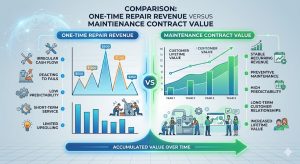
Every service call costs you money before you ever collect a dollar. You spent money on Google Ads or local SEO to generate the lead. Your technician drove to the home. You diagnosed the problem and gave a quote. If the customer declines the repair, you lost money. If they accept, you made a profit on that single transaction and then never hear from them again.
This model keeps you trapped in a cycle of constantly chasing new leads. Your customer acquisition cost stays high because you never get repeat business. Seasonal slowdowns hit harder because you have no baseline revenue to cover payroll and overhead.
Compare that to the company down the street that has 200 active maintenance plan members paying $15 to $25 per month. That’s $3,000 to $5,000 in predictable monthly recurring revenue before a single service call comes in. When winter slows down, they’re still collecting checks. When a plan member’s refrigerator breaks, they call that company first because they’re already paying for priority service.
Appliance repair recurring revenue doesn’t replace your core business. It stabilizes it. It gives you breathing room during slow months and increases the lifetime value of every customer you acquire.
Here’s what most owners don’t realize. The same Google Ads and local SEO strategies that bring in one-time repair calls can also bring in maintenance plan signups. You just need to target the right message to the right audience.
What Are Appliance Maintenance Contracts?
An appliance maintenance contract is a recurring service agreement where a homeowner pays a monthly or annual fee in exchange for preventative maintenance, priority scheduling, and discounted or waived fees on repairs.
These plans work particularly well for appliance repair because most homeowners don’t think about maintaining their appliances until something breaks. A refrigerator stops cooling and they panic. A dishwasher starts leaking and they scramble to find someone available. Your maintenance plan positions you as the company they call first, every time.
The structure of a profitable maintenance contract usually includes:
Preventative maintenance visits. One or two scheduled visits per year where your technician cleans condenser coils, checks seals and gaskets, inspects hoses, and catches small problems before they become expensive failures.
Priority scheduling. Plan members get moved to the front of the queue when they need emergency service. This is a huge selling point during busy seasons when non-members might wait three or four days for an appointment.
Waived or discounted dispatch fees. Many appliance repair companies charge a dispatch fee or trip charge that gets applied toward the repair if the customer approves the work. Plan members don’t pay that fee. It’s included in their membership.
Discounts on parts and labor. Some companies offer 10 to 20 percent off all repairs for active plan members. Others waive labor charges entirely and only bill for parts.
The exact structure depends on your market, your pricing model, and the types of customers you serve. The key is making the plan valuable enough that homeowners see clear financial benefit while still being profitable for your business.
How to Structure a Profitable Appliance Service Agreement
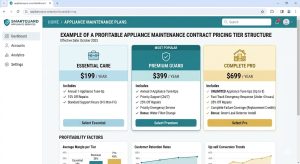
The biggest mistake appliance repair owners make when launching maintenance contracts is underpricing them. They try to compete on cost instead of value and end up with plans that sound appealing but don’t actually generate meaningful revenue or cover the cost of the service they promise.
A good rule of thumb is to price your annual plan somewhere between the cost of one to two typical service calls in your market. If your average repair with parts and labor runs $300 to $400, an annual plan priced at $250 to $350 feels like a smart investment to the homeowner.
For monthly plans, divide that annual number by 12 and add a slight premium. A $300 annual plan becomes $27 per month. A $350 plan becomes $32 per month. Monthly pricing works better for younger homeowners or those who prefer spreading costs, but annual plans generate more upfront cash flow.
Waiving the Dispatch Fee
One of the most effective ways to make your maintenance plan attractive is waiving the dispatch fee for members. If you charge a $79 or $89 dispatch fee for non-members, plan members save that cost on every service call.
This benefit alone can justify the membership if a homeowner needs service twice in one year. It also removes price friction when they call. They’re not worrying about whether the visit will cost them $89 before you even start the repair. They already paid for access.
Priority Scheduling and VIP Service
Homeowners hate waiting. A broken refrigerator means spoiled food. A broken oven means ordering takeout for a week. A leaking dishwasher means potential water damage.
When you tell a plan member “we’ll have someone there tomorrow morning,” and a non-member hears “our first availability is Thursday afternoon,” the value becomes obvious.
Priority scheduling costs you nothing but gives your members a tangible reason to stay subscribed. It also improves your Google reviews because plan members tend to leave better feedback when they receive faster, more personalized service.
Annual Preventative Maintenance Visits
This is where the real long-term value lives for both you and the customer. Most appliance failures are preventable. Dirty condenser coils cause compressors to overheat. Clogged drain lines cause leaks. Worn door seals let cold air escape and force the system to work harder.
A simple 30-minute maintenance visit where your technician cleans coils, checks seals, inspects hoses, and tests thermostats can extend appliance life by years. It also gives you an opportunity to upsell necessary repairs before they become emergencies.
Plan the visit during your slowest months. If January and February are slow, schedule all your annual maintenance visits during that window. You’re generating billable hours during a time when call volume is low, and your customers are getting real value.
The Goldmine: Selling High End Appliance Service Plans
Here’s the part most appliance repair companies miss entirely. Not all customers are equally likely to buy a maintenance contract. Homeowners with builder-grade appliances that cost $500 to replace aren’t going to pay $300 per year for a service plan. The math doesn’t work.
But homeowners with high-end appliances are a completely different story.
A Sub-Zero refrigerator costs $10,000 to $20,000. A Wolf range costs $8,000 to $15,000. A Miele dishwasher costs $2,000 to $3,500. These appliances are investments. The people who own them understand the value of preventative maintenance because they’ve already spent serious money on quality.
High end appliance service plans are easier to sell, generate higher revenue, and attract customers who don’t flinch at your repair pricing. A $400 per year maintenance contract feels reasonable when the appliance cost $15,000 and replacing it would involve custom cabinetry work and weeks of lead time.
These customers also tend to own multiple high-end appliances. If they have a Sub-Zero fridge, they probably also have a Wolf range, a Bosch dishwasher, and a premium laundry pair. One household can generate $600 to $1,000 in annual recurring revenue when you sell them a comprehensive plan.
The challenge is reaching these customers. They’re not searching “cheap appliance repair near me.” They’re searching for specialists who understand their specific brands. They read reviews carefully. They want to know you’re experienced with high-end equipment before they let you touch it.
This is where targeted content marketing and local SEO become critical. A well-written blog post about maintaining Sub-Zero refrigerators or troubleshooting Wolf range problems will attract these exact homeowners. When they find your website and see that you specialize in premium appliances, they’re far more likely to sign up for a service plan.
How to Market Your Maintenance Contracts to New Customers
Building a great service plan doesn’t matter if nobody knows it exists. Most appliance repair companies make the mistake of only offering maintenance contracts to existing customers after completing a repair. That limits your potential membership base to people who have already experienced a problem.
The companies generating serious recurring revenue are actively marketing their plans to new customers who haven’t needed a repair yet. They’re using local SEO, Google Business Profile optimization, and targeted content to attract homeowners who want to avoid expensive breakdowns in the first place.
Leverage Your Google Business Profile
Your Google Business Profile is the first place most local customers discover your business. If your profile doesn’t mention your maintenance plans, you’re missing opportunities.
Add a service listing specifically for your maintenance contract. Title it something clear like “Annual Appliance Maintenance Plan” or “VIP Service Agreement.” Write a short description that highlights the key benefits: priority scheduling, waived dispatch fees, preventative maintenance visits.
Post regular updates about the plan. Google Business Profile posts don’t drive massive traffic, but they increase visibility and give potential customers another reason to choose your company over competitors who only offer one-time repairs.
Encourage your plan members to leave Google reviews that mention the membership. Reviews that say “I’ve been a plan member for two years and always get same-day service” are far more valuable than generic five-star ratings.
Use Content Marketing to Attract Preventative Maintenance Searches
Most appliance repair content focuses on emergency repairs. “Refrigerator not cooling.” “Dishwasher won’t drain.” Those are valuable keywords, but they attract customers in crisis mode who just want the cheapest fix.
Content about preventative maintenance attracts a different audience. Homeowners searching “how often should I service my refrigerator” or “Sub-Zero maintenance tips” are thinking proactively. They own quality appliances and want to protect their investment.
When you publish helpful guides about maintaining specific appliance brands and types, you position yourself as the expert. At the end of the article, you can naturally transition into offering your maintenance plan as the easiest way to ensure their appliances stay in top condition.
This strategy works particularly well for high-end appliance owners. A blog post titled “How to Maintain Your Sub-Zero Refrigerator and Avoid Expensive Repairs” will attract exactly the audience most likely to buy a premium service plan.
Run Targeted Google Ads for Service Plan Signups
Most appliance repair Google Ads campaigns focus on emergency repair keywords. Those campaigns generate calls, but they attract one-time customers.
Consider running a separate campaign targeting maintenance and service plan keywords. Search terms like “appliance maintenance plan near me” or “annual appliance service contract” have lower search volume but much higher intent for recurring revenue.
These campaigns also tend to have lower cost per lead because fewer companies are bidding on them. You’re not competing with every appliance repair company in your market. You’re reaching the small percentage of homeowners who are actively looking for preventative service agreements.
Stop Chasing Calls and Start Building Predictable Monthly Recurring Revenue
Appliance repair recurring revenue changes the way your business operates. Instead of worrying about whether the phone will ring next week, you have a baseline income that covers overhead and payroll. Instead of constantly spending money to acquire new customers, you’re building long-term relationships that increase lifetime value. Instead of working harder every year just to stay in the same place, you’re building equity in a business that’s worth more when you’re ready to sell.
The appliance repair companies that grow consistently and sustainably aren’t just better at fixing appliances. They’re better at building systems that generate predictable results. Maintenance contracts are one of those systems.
But here’s the reality. Most owners don’t have time to build these systems while also running service calls, managing technicians, and handling day-to-day operations. You need help from people who understand appliance repair marketing specifically and know how to attract the right customers at the right time.
That’s where Appliance Marketing Pros comes in.
We specialize in helping appliance repair companies generate high-quality leads, optimize their Google Business Profiles, and build content strategies that attract homeowners who value quality service. Our AMPRank system combines local SEO, targeted Google Ads, and proven content marketing to help you reach the customers most likely to buy maintenance plans and book high-margin repairs.
If you’re ready to stop chasing one-time customers and start building recurring revenue that stabilizes your cash flow year-round, let’s talk.
Schedule a strategy session with Appliance Marketing Pros and we’ll review your current marketing setup, identify what’s holding back your lead flow, and build a plan to help you grow a more predictable, more valuable appliance repair business.
Visit appliancemarketingpros.com or call us today to AMP up your growth.
Frequently Asked Questions About Appliance Maintenance Contracts
How much should I charge for an appliance maintenance contract?
Price your plan based on the value you’re providing and your local market rates. A good starting point is somewhere between the cost of one to two typical service calls. If your average repair runs $300, an annual plan priced at $250 to $350 feels reasonable to most homeowners. Monthly plans should be priced slightly higher than the annual cost divided by 12 to account for the payment flexibility.
Are service agreements worth it for standard appliances?
Service agreements work best when the appliance is valuable enough that the homeowner wants to protect their investment. Standard builder-grade appliances that cost $500 to replace are harder to sell plans for. High-end appliances like Sub-Zero, Wolf, Thermador, and Miele are much easier because the replacement cost is so high that preventative maintenance makes obvious financial sense.
What should I include in an appliance maintenance plan?
The most common benefits include annual or biannual preventative maintenance visits, priority scheduling for repairs, waived dispatch fees, and discounts on parts or labor. The exact structure depends on your market and pricing, but the plan needs to deliver enough value that members feel like they’re saving money while still being profitable for your business.
How do I get customers to sign up for a maintenance contract?
Market the plan actively through your Google Business Profile, your website, and targeted content that attracts homeowners interested in preventative maintenance. Offer the plan to existing customers after completing repairs, but don’t rely only on that. Use local SEO and Google Ads to reach new customers who haven’t needed a repair yet but want to avoid future breakdowns.