
Blog
Why Pros Skip Google Display Ads

If you’ve been running Google Ads for your appliance repair business, you’ve probably been pitched on Google Display Ads. Maybe a rep told you it would “increase brand awareness” or “get you in front of more customers.” Maybe your current agency is already running Display campaigns alongside your Search campaigns.
Here’s what we’ve learned after managing hundreds of Google Ads accounts for appliance repair companies across the United States: Display Ads rarely work for emergency home services. The companies that grow consistently are the ones who skip Display entirely and focus every advertising dollar on Google Search.
This isn’t a theory. It’s what we see when we audit campaigns month after month.
What Google Display Ads Actually Are
Google Display Ads are the banner ads you see on websites, YouTube videos, Gmail inboxes, and mobile apps. They’re visual ads that follow people around the internet based on their browsing history or interests.
Google’s algorithm tries to find people who might need appliance repair based on signals like:
- Recent searches for appliances
- Visits to home improvement sites
- Demographics like homeownership
- Location data
The idea sounds good. Put your company in front of homeowners before their fridge breaks. Build awareness so they remember you when something goes wrong.
In practice, it almost never delivers booked jobs at a reasonable cost.
Why Display Ads Don’t Work for Appliance Repair
People Don’t Browse for Emergency Repairs
When someone’s refrigerator stops cooling or their washer is leaking all over the floor, they don’t scroll through websites hoping to see an ad. They open Google and type “refrigerator repair near me” or “appliance repair [city name].”
Emergency services live on Search. Display Ads target people who aren’t actively looking for help.
We’ve seen Display campaigns generate thousands of impressions and hundreds of clicks without producing a single booked job. The traffic is low intent. People click by accident, out of curiosity, or because they’re vaguely interested in appliances but not ready to schedule service.
You Pay for Clicks That Never Convert
Google charges you every time someone clicks your Display Ad. Those clicks cost money whether or not they turn into phone calls.
Here’s what usually happens:
Someone sees your banner ad on a recipe blog. They click because the image looks interesting or they misclick while scrolling. They land on your website, realize they don’t actually need appliance repair right now, and leave within five seconds.
You just paid for that click. If your cost per click is $5 and you get 200 low-intent clicks a month, you’ve burned $1,000 on traffic that was never going to book.
Search campaigns are different. When someone searches “dishwasher repair,” they have a problem right now. They’re comparing companies and ready to call. Those clicks convert because the intent is there.
Display Metrics Look Good But Mean Nothing
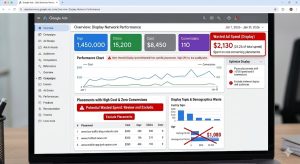
Display Ads generate impressive-looking reports. Thousands of impressions. Hundreds of clicks. High click-through rates.
None of that matters if your phone isn’t ringing.
We’ve taken over accounts where the previous agency was celebrating Display campaign performance while the owner was frustrated by a lack of actual leads. The agency focused on vanity metrics. The owner needed booked jobs.
Impressions don’t pay your technicians. Clicks don’t cover your overhead. You need calls that turn into jobs that generate revenue.
Google’s Audience Targeting Is Too Broad for Local Services
Google thinks it knows who needs appliance repair. It looks at browsing behavior, search history, and demographics. Then it shows your ad to people who fit a profile.
The problem is that profile doesn’t account for whether someone actually has a broken appliance right now. It guesses based on patterns.
We’ve seen Display campaigns target people hundreds of miles outside the service area. We’ve seen ads shown to renters who don’t handle their own repairs. We’ve seen clicks from people researching appliances to buy, not repair.
Even when Google gets the audience right, timing is usually wrong. Someone might browse home improvement content in January and not need appliance repair until June.
Search targeting is simple. If someone searches for your service in your city, they’re a qualified lead. Display targeting requires Google to guess, and those guesses cost you money.
What Happens When You Turn Off Display Ads
When we take over an account running both Search and Display, one of the first things we do is pause Display campaigns and shift the budget to Search.
Here’s what usually happens:
Your cost per lead drops. You’re no longer paying for low-intent traffic.
Your lead quality improves. Every click comes from someone actively searching for appliance repair.
Your budget stretches further. The same monthly spend generates more calls because you’re not wasting money on impressions and accidental clicks.
Your conversion tracking gets clearer. You can see exactly which keywords and ads drive booked jobs.
We’ve never had an appliance repair owner ask us to turn Display back on after seeing the difference.
When Display Ads Might Make Sense (Rarely)
There are a few situations where Display could work, but they’re rare for most appliance repair companies.
If you’re a large company with multiple trucks and a strong brand in a major metro area, Display might support brand recognition campaigns. You’d need a big budget, a long timeline, and a way to measure brand lift separately from direct response.
If you’re running remarketing campaigns to people who already visited your website but didn’t call, Display can work as a reminder. The audience is warm because they’ve already shown intent. Even then, Search remarketing usually outperforms Display.
For most appliance repair businesses, the math doesn’t add up. You’re better off investing in Search, Local Service Ads, and your Google Business Profile.
What Actually Works: Search-Only Google Ads Strategy
The appliance repair companies that get consistent, predictable call volume focus on Google Search campaigns with tight controls.
Here’s the framework:
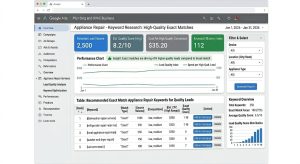
High-intent keywords only. Target searches like “appliance repair near me,” “refrigerator repair [city],” and “[brand] washer repair.” Skip broad terms like “broken appliance” or “home repair.”
Exact and phrase match. These match types keep your ads showing for qualified searches. Broad match wastes budget on irrelevant traffic.
Negative keywords. Filter out searches for parts, manuals, DIY tutorials, and appliance sales. You want repair jobs, not people trying to fix things themselves.
Tight location targeting. Set your campaigns to target people physically located in your service area, not people interested in your area. This prevents wasted clicks from outside your coverage zone.
Conversion tracking that matters. Track phone calls, form submissions, and booked jobs, not just clicks. If you can’t measure real conversions, you can’t optimize your campaigns.
This approach gives you full control over who sees your ads and when. You only pay for clicks from people actively searching for appliance repair in your area.
The Real Cost of Running Display Ads
Let’s say you spend $2,000 a month on Google Ads. If $500 of that goes to Display and generates two low-quality leads, you’ve wasted budget that could have been used on Search.
That same $500 moved to Search campaigns might generate 10 to 15 high-intent calls. Even if your closing rate is 50 percent, that’s five to seven more booked jobs.
Over a year, that’s 60 to 84 jobs you left on the table by running Display. If your average job is $300, you missed out on $18,000 to $25,000 in revenue while spending money on ads that didn’t work.
The opportunity cost is real. Every dollar you spend on Display is a dollar you didn’t spend on something that actually drives calls.
How to Audit Your Current Google Ads Setup
If you’re running Google Ads right now and you’re not sure whether Display is part of your campaigns, here’s how to check:
Log in to your Google Ads account. Go to the Campaigns tab. Look for any campaign labeled “Display Network” or “Display.”
If you see Display campaigns, look at the metrics:
How many clicks did Display generate last month?
How many phone calls came from Display?
How many of those calls turned into booked jobs?
What was your cost per booked job from Display compared to Search?
If Display is eating budget without delivering jobs, pause those campaigns and reallocate the spend to Search.
If you don’t have access to your Google Ads account or you’re not sure how to interpret the data, that’s a red flag. You should always have full visibility into your campaigns.
What to Do Instead: Why Pros Skip Google Display Ads
If you want more calls and better lead flow, here’s where to put your budget:
Google Search campaigns targeting high-intent appliance repair keywords in your service area. This is your foundation.
Local Service Ads (LSA) if available in your market. These show up at the very top of search results and you only pay per lead, not per click.
Google Business Profile optimization. Make sure your profile is complete, your categories are accurate, your hours are updated, and you’re getting regular reviews. A strong profile ranks you higher in the map pack.
Negative keyword management. Constantly update your negative keyword lists to filter out bad traffic. This improves lead quality and lowers cost per lead.
Landing page optimization. Make sure the page people land on after clicking your ad is clear, fast, and mobile-friendly with an easy way to call or book.
These tactics work because they meet people at the moment of intent. Display Ads try to create intent where it doesn’t exist.
Stop Guessing and Start Growing with AMPRank
You didn’t get into the appliance repair business to become a Google Ads expert. You need a system that brings in consistent calls without constant guesswork or trial and error.
That’s why we built AMPRank, a complete marketing system designed specifically for appliance repair companies. It combines Google Search Ads, Local Service Ads, Google Business Profile optimization, and local SEO into one predictable lead generation machine.
We don’t run Display Ads. We don’t waste your budget on low-intent traffic. We focus every dollar on the strategies that actually deliver booked jobs.
If you’re tired of inconsistent call volume, unclear ROI, or agencies that don’t understand your business, let’s talk. Schedule a strategy call with Appliance Marketing Pros and we’ll review your current setup, show you exactly what’s working and what’s not, and build a plan to grow your appliance repair business the right way.