Blog
The "Sealed System" Strategy: Marketing for High-Profit Jobs Only

You spend the same amount on marketing whether the call is for a $120 dryer belt or an $800 refrigerator compressor.
That’s the problem most appliance repair owners don’t see until they look at their books.
You’re paying for volume when you should be paying for value. And nowhere is this more obvious than in sealed-system repairs.
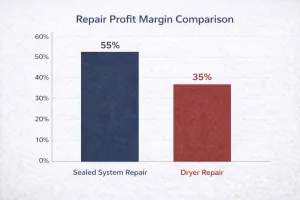
Sealed system jobs are the highest-profit work in appliance repair. One compressor replacement can equal four or five basic service calls. But most repair companies market themselves the same way, whether they’re chasing dishwasher door latch calls or Sub-Zero evaporator leaks.
If you want to grow revenue without adding more trucks or taking every junk lead that comes through, you need to start thinking about your marketing the way you think about your service menu. Not all jobs are equal. And not all leads should cost the same.
This is about targeting the work that actually moves your business forward.
Why Sealed System Strategy Is Worth Targeting
Sealed-system work includes any work involving the refrigeration circuit, such as compressors, evaporators, condensers, refrigerant leaks, and line repairs. These jobs require EPA certification, specialized tools, and real technical skill.
Most appliance repair companies can do them. But very few markets specifically for them.
Here’s what makes sealed system repairs different:
Higher ticket values. A compressor replacement on a built-in refrigerator can run anywhere from $600 to over $1,200 depending on the brand and complexity. Compare that to a $150 icemaker or $200 control board.
Better close rates. Customers with high-end appliances are more likely to approve repairs. A Sub-Zero or Thermador owner isn’t going to throw away a $10,000 fridge over an $800 compressor. They’re going to fix it.
Less price shopping. When someone needs a sealed system repair, they’re not calling six companies to save $50. They’re looking for someone who knows what they’re doing and can do it right.
Repeat and referral value. Customers who trust you with expensive repairs remember you. They call you first next time. They refer you to neighbors with similar appliances.
The problem is that most marketing treats all appliance repair leads the same. You bid on “appliance repair near me” and you get everything: microwaves, washers, dryers, fridges, and a lot of calls that don’t turn into anything.
If you want sealed system work, you have to go after it directly.
The Biggest Mistake: Marketing Like Every Job Is the Same
Most appliance repair companies run a single Google Ads campaign using broad terms such as “appliance repair” or “refrigerator repair.” Then they wonder why half their leads are people with 10-year-old Frigidaire appliances asking whether it’s worth fixing.
You can’t build a high-profit business on high-volume, low-value leads.
Here’s what happens when you don’t target specific work:
You waste ad spend on calls that don’t convert. Someone Googles “fridge not cooling” and clicks your ad. You pay $15 or $20 for that click. Then they tell you it’s a basic refrigerator and they’re just shopping around. No booking.
You compete with every other repair company in your area. Broad keywords mean broad competition. You’re fighting 15 other companies for the same generic search, and the only way to win is to spend more or drop your price.
Your techs spend time on low-margin work. If all your leads are random service calls, your schedule fills up with small jobs. You’re busy, but you’re not profitable.
The fix is simple: stop marketing for everything and start marketing for the work that matters.
How to Target Sealed System Repairs Specifically
Sealed system marketing isn’t about being everywhere. It’s about being in front of the right people at the right time.
Here’s how you do it.
Target Symptom-Based Keywords, Not Generic Terms
Customers don’t search for “sealed system repair.” They search for the problem they’re experiencing.
If you want sealed system leads, you need to bid on the symptoms:
- Refrigerator compressor not working
- Fridge warm freezer cold
- Refrigerator compressor clicking
- Evaporator coil leak
- Sub-Zero not cooling
- Built-in refrigerator repair
These searches have intent. The person typing this knows something is seriously wrong. They’re not price shopping. They’re problem solving.
When you build Google Ads campaigns around these terms, you’re filtering for higher-value work before the call even comes in.
Focus on High-End Appliance Brands
Not all refrigerators are worth repairing. A $400 Frigidaire from a big box store gets replaced. A $12,000 Sub-Zero gets fixed.
If you want sealed system work, you need to target owners of premium appliances:
- Sub-Zero
- Thermador
- Viking
- Wolf
- Miele
- Bosch (built-in models)
These customers expect to pay for quality repairs. They’re not calling around trying to negotiate. They want it fixed right, and they’re willing to pay a qualified technician to do it.
You can target these brands directly in your Google Ads campaigns and on your website. Create dedicated service pages, such as “Sub-Zero Refrigerator Repair” or “Viking Built-In Appliance Service.” Use those brand names in your ad copy and headlines.
This does two things. It attracts the customers you want. And it filters out the ones you don’t.
Use Negative Keywords to Block Low-Value Traffic

Negative keywords are just as important as the keywords you’re bidding on. They tell Google what searches you don’t want to show up for.
If you’re trying to attract sealed system work, you need to exclude terms that bring in low-profit calls:
- Cheap
- Affordable
- Free estimate
- Portable
- Countertop
- Mini fridge
- Dorm fridge
- Wine cooler
You should also exclude specific low-value parts and repairs, such as “ice maker,” “water filter,” “door seal,” and “light bulb,” unless you want to advertise them separately.
Every click costs money. Negative keywords make sure you’re not paying for traffic that will never convert into the work you actually want.
Build Landing Pages for Sealed System Services
Your homepage shouldn’t be doing all the work. If someone searches for “Sub-Zero compressor repair” and lands on a generic page that says “We fix all appliances,” they’re going to bounce.
You need dedicated landing pages that speak directly to what they searched for.
A good sealed system landing page includes:
- A headline that matches the search (e.g., “Sub-Zero Refrigerator Sealed System Repair”)
- A brief explanation of what sealed system repairs are and why they require specialized service
- Your certifications (EPA 608, manufacturer training)
- Clear next steps (call now, book online)
- Trust signals (reviews, years in business, service area)
The page should make it obvious that you handle this type of work regularly and that you’re qualified to do it. No fluff. No generic “we care about our customers” language. Just proof that you know what you’re doing.
Target Affluent Zip Codes
Sealed system work clusters in specific areas. You’re not going to find many Sub-Zero refrigerators in low-income neighborhoods. You will find them in areas with expensive homes, custom kitchens, and homeowners who invest in premium appliances.
If you’re running Google Ads or managing your service area in Google Business Profile, focus your budget on zip codes where high-end appliances are common.
You can adjust your bid strategy by location so you’re spending more in areas that generate better leads. This is especially useful if you’re in a large metro area where some neighborhoods are more profitable than others.
What About SEO for Sealed System Repairs?
Google Ads gets you results fast. SEO builds long-term visibility.
If you want to rank organically for sealed-system work, you need content that targets the right searches and demonstrates your expertise.
Here’s what works:
Service pages for specific brands and repairs. Create individual pages for “Thermador Refrigerator Repair,” “Sub-Zero Compressor Replacement,” and “Built-In Refrigerator Sealed System Service.” These pages should include local keywords (your city or service area) and explain what makes you qualified to do the work.
Blog posts that answer real questions. Write content around the questions people actually ask: “How much does it cost to replace a refrigerator compressor?” or “Is it worth fixing a sealed system leak?” These posts won’t always convert immediately, but they build trust and bring in search traffic over time.
Local SEO and Google Business Profile optimization. Make sure your Google Business Profile lists sealed system repair as a service. Use photos of your techs working on high-end appliances. Encourage customers who had compressor or evaporator work done to leave reviews mentioning the specific repair.
SEO takes longer than paid ads, but it compounds. The more content you publish about sealed-system repairs and premium appliances, the more visibility you gain. And once you rank, you’re not paying per click.
How to Track Whether This Actually Works
You can’t improve what you don’t measure.
If you’re shifting your marketing toward sealed-system work, you need to know whether it’s paying off. That means tracking more than just call volume.
Here’s what to watch:
Average job value. Are the leads coming from your sealed system campaigns worth more than your general appliance repair leads? If not, your targeting needs work.
Conversion rate by keyword. Which searches are turning into booked jobs? If “Sub-Zero repair” converts at 40% and “refrigerator repair” converts at 15%, you know where to put your budget.
Cost per booked job. Don’t just look at cost per click or cost per call. Look at how much you’re spending to get an actual job on the schedule. Sealed system leads might cost more per click, but if they convert better, your cost per job could be lower.
Revenue per lead source. If you’re running multiple campaigns (sealed system, general appliance repair, specific brands), track revenue by source. This tells you which campaigns are actually growing your business.
Most appliance repair companies don’t track this level of detail. That’s why they keep spending money on marketing that doesn’t move the needle.
If you want to grow profit, not just call volume, you have to know what’s working.
Why Most Appliance Repair Companies Won’t Do This
Targeting sealed system work sounds obvious once you see it. But most companies won’t do it.
Here’s why:
They’re afraid to narrow their focus. They think if they stop advertising for every type of repair, they’ll lose business. In reality, they’ll lose low-value calls and gain high-value ones.
They don’t have the technical skills. If your techs aren’t comfortable with sealed system work, you can’t market it. But if you have the skills and you’re not marketing them, you’re leaving money on the table.
They don’t know how to set up the campaigns. Building keyword lists, writing ad copy, creating landing pages, and managing bids takes time and expertise. Most owners don’t have either.
They’re working with a generic marketing agency. If your agency doesn’t understand appliance repair, they’re not going to know the difference between a sealed system job and a door hinge replacement. They’ll build you a broad campaign and call it a day.
This is where specialization matters. You need someone who understands your business, knows what high-profit work looks like, and can build campaigns that target it.
What This Looks Like in Practice
Let’s say you’re an appliance repair company in a mid-size metro area. You have three techs. You’re EPA certified. You handle sealed system work regularly, but most of your leads come from generic “appliance repair” searches.
Here’s what changes when you shift to a sealed system marketing strategy:
You launch a Google Ads campaign targeting symptom-based keywords like “refrigerator compressor not working” and brand-specific terms like “Sub-Zero repair.” You exclude low-value terms like “cheap” and “portable.”
You create landing pages for Sub-Zero, Thermador, and Viking refrigerator repairs. Each page highlights your EPA certification, manufacturer training, and experience with high-end appliances.
You adjust your service area targeting to focus ad spend on zip codes with higher home values and more built-in appliances.
You add sealed system repair content to your website and optimize your Google Business Profile to show up for those searches locally.
Within 60 days, you’re getting fewer total calls, but your average job value is up 35%. Your close rate improves because the people calling are serious about getting their appliances fixed. Your techs spend less time driving to jobs that don’t convert and more time doing profitable work.
That’s what happens when you stop marketing for volume and start marketing for value.
Stop Competing on Volume and Start Competing on Value
Most appliance repair companies are stuck in a low-margin game because they market themselves the same way as everyone else.
They bid on the same broad keywords. They take the same shared leads. They compete on price. And they wonder why they’re busy but not profitable.
Sealed system repairs are the way out.
You don’t need more leads. You need better leads. And you get better leads by targeting the work that actually pays.
If you’re EPA certified and your techs can handle compressor replacements, evaporator leaks, and refrigerant work, you’re sitting on a profit center that most of your competitors aren’t marketing for.
The question is whether you’re going to keep spending money on generic campaigns or start building a system that brings in the work you actually want.
If you want help setting this up the right way, we should talk. Appliance Marketing Pros specializes in building marketing systems for appliance repair companies that want predictable, high-value lead flow. We know how to target sealed system work because we’ve done it for companies just like yours.
Book a strategy call and we’ll walk you through exactly how this would work for your business. No pressure. No generic pitch. Just a real conversation about how to grow revenue without chasing every low-profit call that comes your way.